The sweet granularity of stillness
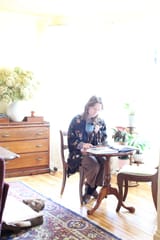
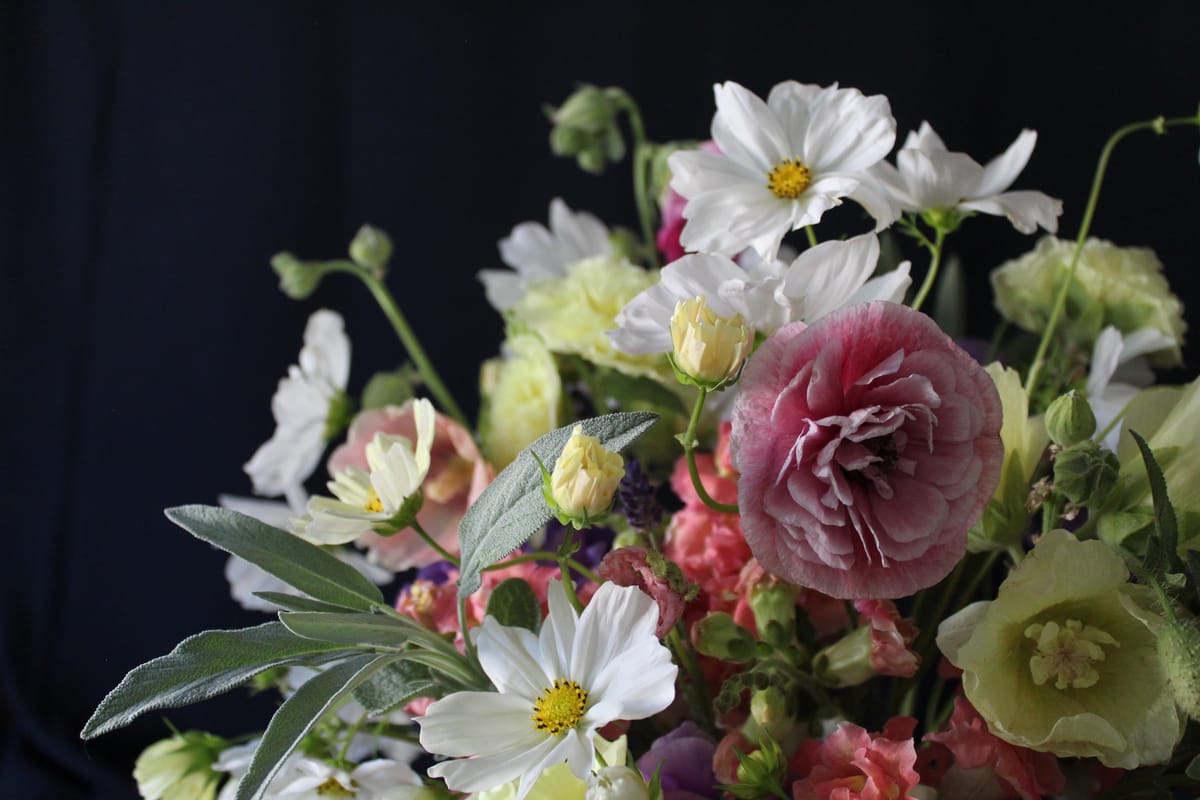
I'm remembering how to be still. It's so nice.
I originally grew flowers because they were the funnest way I could think of to make a living. Just challenging enough, total autonomy, and they turned a decent enough profit to sustain me and my kids. But the best thing about growing flowers was through that frantic process of building a market farm from nothing, they taught me to love stillness.
When I was farming I spent about ten hours a day outside, rain or shine. That first year I barely had time for social media, and the survival-level urgency of it shattered and reprogrammed every habit I'd formed with digital tools. The only engagement I had time for was marketing-flav engagement because it was literally how I was surviving; I had left my city job and my entire network, purchased an unliveable homestead, took on $50k in debt to renovate the house, took on another $80k in debt to buy business assets, and I had no back up plan. I needed those flowers to werk.
My story wasn't "entitled brat decides to be an influencer flower farmer," it was just me deciding to ditch the system I hated. I had experience doing marketing and communications with scrappy arts groups and nonprofits, spinning straw into gold with no resources, so I figured throwing myself into a survival situation might bump those skills into hulk mode. My kids' dad and I had a great relationship too, he was totally supportive. Can you imagine what a good person he was to give me that space? He rooted for me and was endlessly flexible even though my dinky farm was over an hour away – he literally made it possible for me to be free. Losing him brought a very fundamental form of grief. He was truly my cornerstone.
As the cancer took him faster than any of us were prepared for, I thought maybe I could stay on the farm with the kids – of course I was hoping to keep farming flowers, but there was also a part of me that really wanted them to have the "great outdoors" and the quiet of the prairies to grieve in. But grieving kids need their momma. I couldn't carry a farm, a business and two grieving tweens. We were free flying birbies that had hit a window.
But we were well-caught, and one of the lessons I take from those years is that love is a real force. Love can quite literally create a cushion for three grieving girls – love expressed through trust, showing up, checking in. It's easy to forget the power of collective love. Not doe-eyed, rose-tinted love. Just "I'm here with you". I think our online spaces have distorted how our society understands love; it's being drowned out by our online culture of market-driven fear-cultivation, transactional communities and hollow communication tools. I think digital media has literally corroded our ability to engage with deeper emotion, preventing us from feeling the full spectrum of love we could be collectively benefitting from.
And not to get too hokey here but love isn't something that comes from unknown or "other" forces, it's something we generate ourselves. I think that's where organized religion goes wrong – love isn't something that's bestowed on us, and it isn't something we have to earn – it's just there, we choose it, we generate it, from ourselves in every direction, and when enough of us engage in it, it forms a protective fabric. Love for our silly species, love for the wind, love for birds, spiders, photons, love for our vast ability to feel – love in every direction comes from us, and collectively it's a really fckin powerful force. It's a tragedy that social media and standardized modes of communication distort and dampen its frequencies.
Anyway all that to say, the fabric of love literally caught my kids and I, and allowed us to heal. Love generated largely by their dad, who was like a supernova of the chillest purest love.
And when the box started to feel like a cage (healing takes more time than most of us want it to), I had flowers. I knew them. I'd spent four years on the farm focused on coaxing them to work with me. Cut flowers are like haircuts for plants; lots of plants love a weekly trim and send up two-to-four new shoots to replace a cut stem. The plant becomes more robust, stronger, fuller. Its overall health still depends on the soil and conditions of its ecosystem, but lots of annuals just love the attention (their seasons are so brief after all). So life as a flower farmer was like: boots on, shears in hand, "let's go girls". It was the best.
I got to know the varieties pretty well. Different temperaments, needs, vulnerabilities; the relationship was very much, "I just want to live a breathable life" meets, "we literally just love being alive". It was a great match, and it became a deeply educational sort of love.
So back in the city I grew flowers in my little cage while keeping things steady for my kids, and as my gardens became fuller with the hundreds of seedlings I started every spring, seeing my beauties again was like seeing old friends, except they didn't have to werk it anymore, so we just hung out. You know how it feels when someone sends you flowers? Having a healthy garden in full bloom with all your favourites is like that x100. The love extends through the entire network – there's love in the soil, in the fungal networks and microbes moving nutrients from root to root, everyone engaged in the work of reciprocity, no one taking more than they need, simply for the sake of living beautifully together. That's love to me.
So the flowers fed me love (along with our families and friends supporting us) which gave us what we needed to move forward. And as soon as my baby birbs were well enough to fly again, off we went. Once again free from the box, and I aim to keep it that way this time. And the best thing about flowers is that while, yes, I left my pretties behind in the gardens of my city house – gardens I had cultivated from seed out of plain grass city lawns – they also came with us as roots, bulbs and seeds. I'll see them all again this spring and summer, whee! They're a type of love that multiplies.
A garden teaches stillness and it teaches love. It teems with granular beauty; a bee revelling on a pollen-flooded pistil; an ant farming aphids, rubbing their bellies to make honeydew (a sweet secretion aphids literally make more of when they're happy!); caterpillars steadily monching their breakfasts; a garden teaches you to see, just as it teaches you to work. A fundamental mother; deep breaths, my dear. I'll show you how, be patient and pay attention. I love you.