Schrödinger's feelings
A light philosophical discussion positioning subjective feelings as decoherence milestones; emergent feelings bring agency, agency brings meaning. Feelings cascade across relations and bring collective causal agency.


I'm not a physicist or a mathematician. I'm an existential absurdist and a theoretical physics fangirl who just happened to have a lot of time to think this year. This post oscillates between my usual tone and something a bit more formal as I prepare to re-enter academia (philosophy of science, look out nerds!). Modernist-formalism has, imho, become a bottleneck for the exchange of ideas while our information flows have simultaneously become tarpits of communication. The noise is outpacing us, and as a communicator I feel an urgency to "skip ahead" and try to seed adventurous exchange through the channels available to me.
I few years ago I had the flicker of an intuition that "feelings" behave a lot like quantum phenomena. I'm pretty sure I mentioned it during a few fleeting relationships (fleeting relationships fit this theory too, don't worry about it), and more recently, while puttering around and feeling existentially bored I decided to dig into the idea. What follows here is what came of that digging and ngl, it's pretty tight.
All of these ideas are grounded in Hugh Everett's many-worlds interpretation (-) and H.D. Zeh's many-minds interpretation (-). For those unfamiliar, these theories have sparked energetic discourse in the world of theoretical physics over the past century; Everett's theory first emerged in 1957 and was broadly dismissed until being popularized by Bryce DeWitt in the 1970s (-), after which it progressively became central to discussions of quantum wave function collapse (-). Hundreds of interpretations, both formal and informal, have since spawned, fittingly pulling physicists and mathematicians into spirals of hypotheses and paradoxes. The theory presents an impossibly intriguing proposition: that every interaction in the physical world generates new potential worlds. Multiverses, parallel realms, alternate histories – all since well-explored in science fiction and popular culture, ideas I've played with in past pieces too (Part II of my "funny little emulated worlds theory"(-) is coming soon - I have so many new ideas!).
The Schrödinger equation (-) supports the many-worlds theory cleanly by providing a universal, deterministic wave function, falling just short of resolving branching mechanisms (according to my understanding). For those unfamiliar, the famous central paradox of the Schrödinger equation asks, is the cat in the box (which they've helpfully supplied with radiation and poison) alive or dead? As long as we don't open the box, both possibilities remain true in superposition, until observation confirms either or. That observation, however, can only access the affected state, never the superposed, and so cannot measure superposition.
Of course something the paradox never considers is the cat's subjective experience, and why would it? Empiricism has little time for silly matters such as the consciousness of a cat. For my part, I know that if I was a cat who found themself left alone in a box, indefinitely, with only radiation and/or poison to supplement myself with, I would probably die. That's just me. Totally fair if some scientists want to stand outside the box and pretend they can never be sure, though (-).
Yet especially now, with the rise of AI demanding humanity resolve the meaning of consciousness, such paradoxes have become harder to skirt around. Agentic AI backs us into a corner and asks us directly, if consciousness isn't just a matter of behaving consciously, what is it?
Ahead of his time, Zeh, in his paper The Problem of Conscious Observations in Quantum Mechanical Description (2000 -), said, "Based on the assumption of a physical reality in space and time, one either assumes a "coupling" (causal relationship – one-way or bidirectional) – of matter and mind, or disregards the whole problem by retreating to pure behaviourism." In the same paper he advocates for the role of subjective experience, asserting, "Instead of forming an epistemological impasse, subjectivity should thus be regarded as an epistemological gateway to reality."
So let's talk about our feelings, the subjective oil to empirical water.
A feeling can change the course of an individual's life, and a potent feeling has, on several occasions, changed the course of the world. Mechanistically, a feeling behaves much like a decoherence milestone; an emergent, interaction-borne, information-bearing unitary action that leaves correlated records distributed across many degrees of freedom (-). Following this analogy, a feeling also generates a superposition state comprised of several potential families of futures and histories – a state stabilized through the structure of its correlations.
Intuition, awareness, emotional states and sensorial input all comprise internal state vectors that cascade across synapses. Depending on the strength or "weight" of the feeling, the cascade may extend beyond the mental and physical boundaries of the body and into the shared world. Causal extensions of a potent feeling can reshape relational dynamics, political ideologies, and entire societies.
Now let's extend the analogy to the conscious individual, comparing them to quanta. An individual is both an observer and the observed, yet cannot objectively observe themself, nor subjectively experience the world through the perspective of another individual. From the subjective position of an observing conscious individual, other individuals don't "exist" until they enter the observing individual's subjective realm of awareness. How can you know about someone you don't know about? Without some form of conscious or physical interaction, it isn't possible.
But once you observe others in some way, physically or conceptually, one-way or bi-directionally, varying degrees of freedom are produced between yourself and the observed – an entanglement forms, however slight, causing each of you to have some degree of influence on each others' causal stories. Using formal-ish terms: feelings, having emerged and cascaded through your nervous system, function as effective state vectors that causally determine the robustness of correlations formed through interactions. Your causal story relies directly on the nature of your relations.
Interactions are potent bidirectional observations, and if we step up one scale from conscious neural interactions to conscious individual interactions, the analogy of decoherence milestones remains pretty crisp; emergent, interaction-born, information-bearing unitary actions that leave correlated records distributed across many degrees of freedom, generating superposition states comprised of several potential families of histories – states stabilized through the structure of their correlations.
This might seem an appealing prospect to diehard fans of celebrities – to become entangled with your idol (which sort of defines ultrafans) – but entanglement without correlations dissolves quickly. Your knowing about someone while they will never know about you may have a direct causal influence on your life, but the degrees of freedom they experience from the entanglement may simply be in the form of indirect inertia, which might be why a benevolent famous person feels compelled to thank their fans – as receivers of the combined inertia generated by multiple one-way entanglements, their causal futures are very much influenced by the degrees of freedom produced by their supporters. Similarly but inversely, an individual who demands or coerces entanglement with other individuals through manipulation does not guarantee themself positive causal stories, in fact such actions might instead guarantee net negative outcomes both for themself and the collective. Externally imposed inhibition of agency on others, enforced across many individuals' freedoms, obviously inhibits agency of the collective, such is the nature of cascading causation.
In this analogous framing of both feelings and conscious individuals as quanta, we can also consider locality and nonlocality, most famously explored by John S. Bell between 1964 and 1990. The principle of locality states that an object is influenced directly only by its immediate surroundings (-). Meanwhile the concept of nonlocality proposes "instantaneous" action-at-a-distance (-). The enduring sticky bit in-between is that one is relatively easy to measure, and the other pretty difficult, due especially to Einstein's special theory of relativity (-), which limits the maximum speed of causal influence to the speed of light, a problem that basically set off the spin of quantum science's loopy history.
How they've so far been able to make it mostly work has been with "hidden variables"(-) – a solution Zeh impatiently criticized, "it appears questionable whether anything, and what, might be gained from inventing novel fundamental concepts (hidden variables) without any empirical support. Two different solutions of the measurement problem then appear conceivable: Von Neumann's collapse or Everett's relative state interpretation."(-) Von Neumann's collapse demonstrates how consciousness causes collapse (-) – that is, when a state moves from superposition to definite, from unobserved to observed, it undergoes what von Neumann called a "wavefunction collapse", leaving only the definite results measurable. It essentially tells us a quantum particle (or Schrödinger's poor cat) is impossible to observe/measure without altering its state in some way, and that attempts to measure it will collapse the wavefunction (a wavefunction has something to do with amplitude – I am not a scientist), only ever capturing an observed particle changed by the observation, never the superposed state itself. Quite a tangle.
Everett's solution to the measurement problem was a "relative state collapse"(-) that proposed dropping the collapse premise from the standard formulation entirely, "then deduce the empirical predictions of the standard collapse theory as the subjective experiences as observers who were themselves modelled as physical systems in the theory." (-) From here, "pure wave mechanic"(-) systems were born which mathematically represented observers, through stored, stable, effectively non-interfering records (thank you Wikipedia). As I read through various interpretations of pure wave mechanics, I kept waiting for the obvious: that an individual's subjective feelings and interactions functionally represent many mechanisms of quantum events. So many came close then stopped short, abruptly and frankly, absurdly. But given academia has been so dominated by patriarchal structures for so long, it's no great wonder they couldn't talk about feelings. Feelings in such a world are frivolous weaknesses, the polar opposite of empiricism – not serious science. It might not be an overstatement to suggest formalist patriarchal blindness may well have held science back for the past hundred years (at least).
Let's think about the moment when you hear news of a major event in a friend's life. Your heart pings for them. You decide to reach out to them and see how they're doing. Your friend receives and benefits from your support, and you carry on. What just happened?
A decoherence event emerged the moment you heard their news (a conscious interaction) and experienced the feelings it evoked. We might even point to event related potentials (ERPs) in the brain as the processes/locations where such a decoherence event is triggered – neurobiology shows us that external stimuli is a direct cause of emotional response via ERPs (-) – when you heard your friend's news, as the feelings it evoked became "real enough" they produced different possible alternatives (should I reach out or should I wait until I see them next? Would they find it weird if I reached out? Maybe I shouldn't... what should I say?) along with correlated records (attention, action, memory, bodily signatures): decoherence. In this example, decoherence presents as a one-way interaction that creates instantaneous entanglement, then through the structure of additional correlations (you reached out, had a conversation, shared the connection), a definite, shared causal story becomes your reality.
And no one who isn't you can ever experience or observe the subjective experience of that event. You became the measurement of a nonlocal superposition state as you considered which action to take based on your friend's news, and an irreversible, entangled trajectory was established. Here let's return to Zeh (-) where he advises, "it may be wise to accept the description of physical reality in terms of non-local state vectors, and to consider its severe consequences seriously." Such "severe consequences" may be that empirical formalism has reached the limits of its usefulness, and that subjective inclusion is required if we wish to progress as an intelligent species.
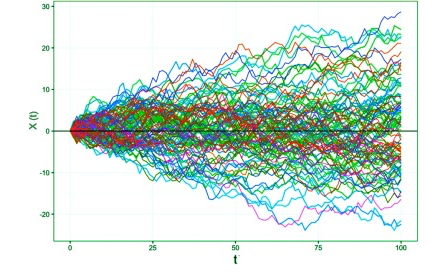
And what does Schrödinger have to do with it? Here we'll turn to the research of Partha Ghose and Dimitris A. Pinotsis in a paper titled, The FitzHugh-Nagumo equations and quantum noise (-). The paper's abstract explains that their work "first demonstrates that neuronal noise of the Brownian motion type is mathematically equivalent to a wave-particle description of the kind predicted by a fundamental equation in quantum mechanics known as the Schrödinger equation. It then extends the considerations to the more realistic FitzHugh-Nagumo model which has been widely used to describe neuronal dynamics."
The paper further states, "On the basis of the demonstrated equivalence of neuronal dynamics and Schrödinger-like behaviour, one would expect that the presence of non-classical correlations in neuronal fluctuations, akin to quantum entanglement, could be detected through cross-correlation analyses of simultaneous recordings from neighbouring neurons."
So what does it mean if feelings are indeed quantum phenomena? If the solution to the measurement problem of quantum mechanics was something so close and so familiar all along? If, this whole time, all that was required of theoretical academia was to get in touch with their feelings? In the words of Zeh (-): "embarrassing".
Over the past century this concept has appeared inconceivable to empirical theorists; in their 1988 paper discussing the many-minds interpretation, Albert and Loewer (-) argued that the mind of an observer cannot be in an indefinite state because an observer must answer the question about which state of a system he has observed with complete certainty. One has to wonder if the phrase "I'm not sure" had ever entered into their lexicon. Further, just because the mind of the observer lacks the means to communicate their experienced indefinite state does not mean the state never existed. It may simply be that the bounds of formalism haven't allowed such a vocabulary to emerge. Perhaps one day it will become commonplace for individuals, when faced with uncertainty, to acknowledge "I'm just in a fragile superposition state right now". Indeed (I SAY INDEED), the entire field of quantum science appears to have existed in an extended fragile superposition state for the past hundred years.
The cascade of a strong feeling produces downstream records that other components can condition on, while potential families of histories quickly become practically distinguishable, and interference between them inaccessible as state records produce an experience of definiteness. Observers of the experience find themselves embedded in the world of that experience, behaving as though a single outcome happened – a distinction that becomes locked in as a stable part of the individuals' causal story. Beyond epiphenomena, feelings are critical functions within our shared causal web.
Building from this conceptual framework, we can also explore the idea of the "superposition of self" – that is, if the conscious individual's subjective experience holds as an operationally legitimate quantum process, it follows that a conscious individual would also subjectively experience superposed states. To assess the experienced "weight" of that superposed state (which might imply comprehensibility – an intriguing idea) we'll apply Vopson's second law of infodynamics (-), a recent and profound addition to the universal laws of physics that presents an orthogonal (opposite) counterpart to the second law of thermodynamics (which states that the entropy of any system must remain constant or increase over time(-)); Vopson's law examines the evolution of our information systems (defined as physical systems containing information states) and finds that information entropy must remain constant or decrease over time, the exact opposite to the evolution of physical (thermodynamic) entropy, yet still acting within the same system (our reality).
In the past I've pictured thermodynamic entropy as a branching tree of energy, knowing the analogy was oversimplified and incomplete, because if energy only increases via entropy, complete diffusion follows – something more like a halo of light surrounding a minuscule point of origin, fading as it spreads. However with Vopson's law, we can resolve the idea of branches; rather than complete diffusion, a decrease in information entropy creates compressed, discernible, progressively refined branches of reality over time.
Grounded in this insight, we might consider a scenario where an individual's total thermodynamic entropy increases through environmental and conscious interactions, the subsequent degrees of freedom produced also dictating decreased local information entropy – that is, reduced uncertainly, ie: clarity of thought, or perhaps, depending on the nature of their interactions, artificially homogenized thought, as we see in algorithmically-dominated social media networks.
The intriguing possibility of superposition comprehensibility also emerges here: if an individual were to conscientiously engage with interactions closer to grounded, sustained signals (ie: global or universal meaning generated through long-term evidential practices), might those subsequent reductions of uncertainty place them in more stable states of superposition, effectively increasing distinguishability of their superposed state? If their causal branch becomes more certain, does it follow their future also becomes more predictable? This also surfaces concepts of intuition and déjà vu, and points to growing research exploring "memories of the future"(-). Maybe these phenomena are brief windows of superposition distinguishability.
This could apply in cases where degrees of freedom emerge both through agency and through imposed systems: a superposed state generated through individual agency might be as clear as one imposed through external systemic forces, though the latter would offer less progressive causal freedoms than the former. Systems with more intense impositions on individual agency would restrict that individual's causal freedoms, and as explored in the ideas above, those causal correlations would cascade through collective freedoms as well, effectively (and maybe exponentially) reducing the freedoms of groups and societies up the supervenient chain of existence (-). This calls the concept of "power" directly into question, and asks how abuses of power might propel imbalances within our shared causal story.
The combined ideas of causality and individual agency also bring to mind solitude-based spiritual practices (monastic, conventual, eremetic) and calls to the Delphic maxim of "know thyself" (-) and Plato's "know your soul" (-), but more potently it points to later common themes of one's ability to acquire knowledge of the self by studying the universe, or knowledge of the universe by studying oneself, ie: the microcosm-macrocosm analogy (-). We can speculate that if it were possible for an individual to exist in a state of stable superposition with themself, the experience would indeed (INDEED) be one of personal transcendence.
However, such transcendence on an individual level would in theory require near-complete absence of dynamic freedoms beyond one's control, such as social and environmental interactions. This surfaces ethical questions around an individual's causal accountability to "middle-systems"; if one chooses a coupling between their self and the universe alone, what of middle-scale systems such as communities, societies, networks and our shared planet? What good does such individual (and relatively speaking, extremely temporary) transcendence ultimately do for the trajectory of humankind, and how can a society transcend together if practices of "transcendence" remove enlightened individuals from our shared causal stories?
It also follows that it may be humankind's highly evolved nervous systems that make us causally superior within this supervenient level of existence (this level being: relationary groups/classes/networks emerging into technological institutions); our ability to feel to the degrees and depths we do directly enables our causal dominance as a species. From there we might ask, what becomes of our causal agency when we lose or deny our ability to feel?
And if we're talking about decoherence events, we also have to discuss thresholds. What is the limit that must be crossed for the feeling (within the individual) or interaction (between individuals) to become "real enough" to produce a decoherence milestone and subsequently cascade into a definite causal branch? It looks like Ghose and Pinotsis came close to resolving that in their study as well (-drift diffusion depicted in Fig 2). If we take such an event to be the same point that generates irreversible superposed dynamics between the system and the environment; that's actually where causal agency emerges and applies, and it's that emergence of agency that brings meaning to the individual's or group's path. How that feeling emerges and manifests has real causal significance – it determines the individuals' available freedoms, entanglements and superposed futures and histories.
That exact point and the subsequent emergence of meaning could even be considered the emergence of consciousness itself. Perhaps consciousness is not a constant state, but rather only endures as long as it interacts. Perhaps Descartes' cogito, ergo sum; I think, therefore I am may be extended to emerimus, ergo sumus; we emerge, therefore we are.
It builds not just a strong case, but an existential case for the healthy regulation of our feelings. It puts recreational use of dissociative drugs like ketamine under a new light, and it exposes systems designed around extractive and fracturing practices to be in direct interference with both our individual and collective causal freedoms.
The emergence of feelings and agency may well be the causal keys to the trajectory of our shared reality. Maybe it's time empiricists got in touch with their feelings.
If you read this and found it potent, I invite you to share its principles with others, and encourage them to do the same. As I noted at the beginning, the noise is outpacing us. It's important we understand the causal significance of our feelings. Collective inertia, generated by us, very much influences the future of our shared reality.
That said, ©2026 Sarah Adams. All Rights Reserved. Please don't poach my writing. Reuse allowed only with link/attribution.