Carney's Davos speech was a sales pitch – Part III

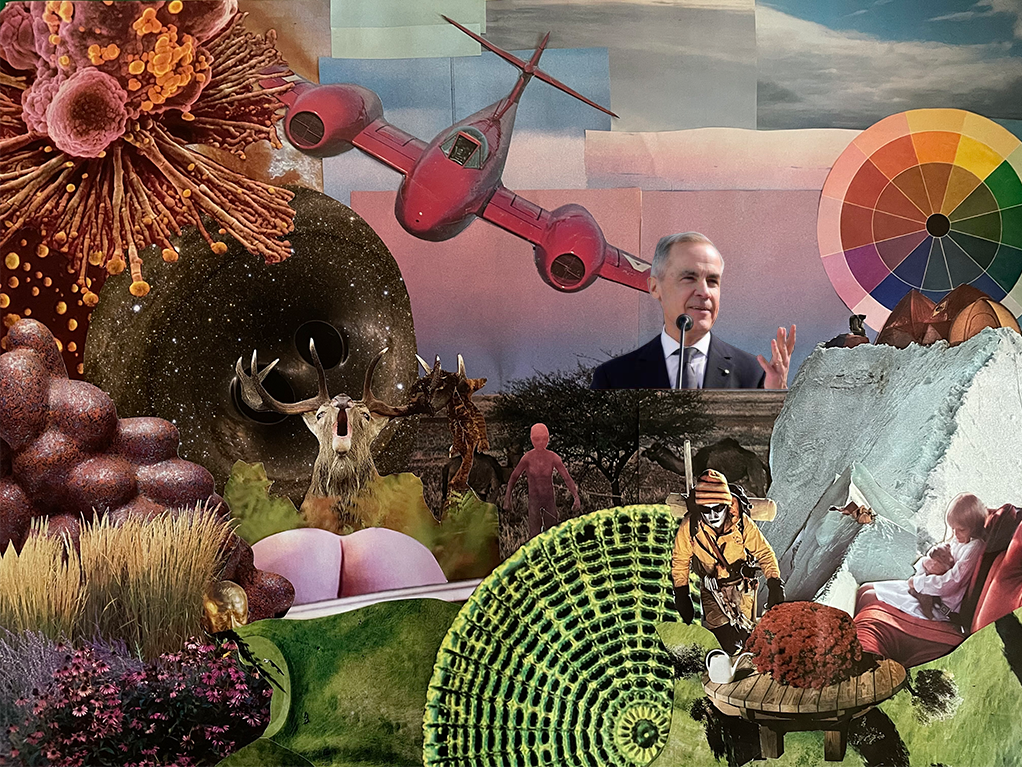
Our elite banker-turned-Prime Minister has entered Canada into a self-imposed, nonstandard Structural Adjustment Program, enforcing economic measures typically applied to developing nations. Why?
My previous interpretations of Carney's Davos speech, first identifying it as a sales pitch (which it was) and then noting his alignments with Trump (which have since become more clear), were accurate, if only lacking context due to my pleb-level access to information. I now have that context and the puzzle has formed a comprehensive picture, one revealing the details of Carney's "more ambitious" plan, and who that plan ultimately benefits. Spoiler: it isn't us.
Structural Adjustment Programs (SAPs) are controversial economic tools used since the 1980s by global lenders like the International Monetary Fund (IMF) and the World Bank. SAPs are rooted in neoliberal economic principles advocating for reducing government intervention, promoting trade, and doubling down on free-market capitalism as means of restructuring economies toward stability and growth. They're also meant to balance debt repayments and, theoretically, reduce poverty.
The highest-level goals of a SAP aside from economic restructuring, are to improve international competitiveness and restore a nation's balance of debt. The primary measures of such programs are (as per Faster Capital):
1. Fiscal Austerity: Reduction in government spending, often in the form of cuts to social programs, to reduce budget deficits.
2. Monetary Tightening: Increasing interest rates to curb inflation.
3. Trade Liberalization: Removing trade barriers to encourage foreign investment and exports.
4. Privatization: Selling off state-owned enterprises to the private sector to increase efficiency and generate revenue.
5. Labor Market reforms: Making labor markets more flexible, often by weakening labor protections.
Sound familiar? Such measures have been applied throughout Carney's policies since coming into power, which I reviewed in my Part II post of this series, at the time seeing them more as actions of cold corporate capitalism than a "pragmatic" strategy. They are cold corporate capitalism, but they also aren't a new design. Their historical playbook has been a primary strategy of global funding institutions since the 1980s at least. They are advantageous to foreign investors and deteriorative to nations operating under them.
The impacts of these programs have been limited with a few success stories, and in the main produced negligible or negative impacts. Worst hit are the poor and vulnerable, who suffer unemployment, job insecurity, rising prices, reduced services, and ecological marginalization. - The Open University
Critics have argued SAPs are detrimental to social welfare, and many have compared them to blackmail, as developing nations are given all but no choice to comply. Globalist capitalists love SAPs, because they effectively open nations up to resource extraction.
Typically, Structural Adjustment Loans (SALs) can't be spent by receiving nations on health, development or education programs. Mexico was one of the first nations to implement a SAP, and nations who've since entered such programs include East and South Asia, Latin America, Africa, Colombia, Turkey, Philippines, Pakistan, Nigeria, Sudan, Zimbabwe, and India.
As per Wikipedia, typical "stabilization" policies within SAPs include:
- balance of payments deficits reduction through currency devaluation
- budget deficit reduction through higher taxes and lower government spending, also known as austerity
- restructuring foreign debts
- monetary policy to finance government deficits (usually in the form of loans from central banks)
- eliminating food subsidies
- raising the price of public services
- cutting wages
- decrementing domestic credit.
Long-term adjustment policies usually include:
- liberalization of markets to guarantee a price mechanism
- privatization, or divestiture, of all or part of state-owned enterprises
- creating new financial institutions
- improving governance and fighting corruption (from the perspective of a neoliberal formulation of 'governance' and 'corruption')
- enhancing the rights of foreign investors vis-à-vis national laws
- focusing economic output on direct export and resource extraction
- increasing the stability of investment (by allowing foreign investors) with the opening of companies
- reducing government expenditure e.g. reducing government employment
So, all good news for us regular citizens (sarcasm).
How successful have Structural Adjustment Programs been?
The European Institute for International Relations calls SAPs "less of a rescue and more of a reckoning*", and soberly highlights their realities:
One of the cornerstones of SAPs was the aggressive push for privatization. State-owned enterprises were sold off, often hastily and without adequate regulation. In theory, this was supposed to encourage efficiency and attract foreign investment. In practice, it led to crony capitalism and the concentration of wealth in the hands of political elites and multinational corporations. Public utilities, such as water, electricity, and transportation, were transferred to private actors with little oversight. Prices rose, access became unequal, and essential services were turned into profit-driven commodities.
Finally, austerity was perhaps the most infamous element of SAPs, which left a lasting legacy of underdevelopment. Basic rights like education, health, and food security turned into luxuries, thus maximizing poverty and the death rate. Despite the Structural Adjustment Programs coming as a response to the failure of the Poverty Strategy Papers, they still continued with the imposition of an economic and political system that only damaged every aspect of life in countries that asked for the IMF’s help.
We also have studies like, Structural adjustment programmes adversely affect vulnerable populations: a systematic-narrative review of their effect on child and maternal health, stating in its abstract:
Our review finds that structural adjustment programmes have a detrimental impact on child and maternal health. In particular, these programmes undermine access to quality and affordable healthcare and adversely impact upon social determinants of health, such as income and food availability.
Why would Canada need a SAP?
There are many more studies revealing the damning legacies of SAPs. But if they're so destructive and exploitative, why would Canada engage in such programs? Aren't we considered one of the "rich" nations of the North?
In December 2025, Canada's Minister of Finance and National Revenue, François-Philippe Champagne, celebrated the IMF's assessment of Canada's economic position, which stated that Canada's economy “held up better than expected” and that its “financial system remains resilient”,
The IMF also asserts that “inflation has been contained, creating space for monetary easing.” In addition to these positive confirmations, the IMF also recognizes Canada’s fiscal space given its low debt burden and contained deficits.
As stated by Champagne (bolding mine),
“This report is a powerful validation of Budget 2025. The IMF recognizes our actions, from boosting innovation and productivity, to our new Capital Budgeting Framework that relentlessly prioritizes capital investments to grow our economy. Our government will continue making smart, targeted investments to build Canada Strong and secure our place as a global leader in growth.”
This, plus Canada's low Cost of Debt (COD), forms a seemingly positive outlook for bankers like Carney, who views the world explicitly through the lens of funding bodies like the IMF. But despite Canada's economic advantages, approval from the IMF isn't necessarily reassuring. From the International Law and Policy Brief:
The International Monetary Fund’s (“IMF”) current loan programs to support low-income countries (“LICs”) are simply Structural Adjustment Programs (“SAPs”) disguised under new names. These programs, created in response to staunch criticism of the IMF’s SAPs, have many of the same negative effects, including poor long-run economic growth, increased poverty, adverse effects on social welfare, and overall net benefits for the U.S. and other dominant countries at the expense of LICs.
Canada isn't typically considered a "low-income" country, a fact that ought to ease our anxieties. Perhaps Carney is leveraging Canada's strong position to "supercharge" the nation's economy using such measures as they ought to be used.
Oh look, Carney's government literally uses the word "supercharge" to frame Budget 2025.
“Budget 2025 is about building Canada strong: investing in our people, our ideas, and our industries. We’re ushering in a new economic strategy to supercharge growth and give businesses the confidence to invest. We will enable $1 trillion in total investments in five years – to give ourselves more than any country could ever take away.” – The Rt. Hon. Mark Carney, Prime Minister of Canada
Perhaps Carney thinks developing nations simply did it wrong. He may see Budget 2025 as his chance, as an astute and pragmatic (he has ruined that word for me) representative of the financial elite, to prove IMF lending models to be the invaluable economic tools they were meant to be.
But on the topic of Canadian incomes, does anyone remember this "secret" RCMP report from 2024, warning Canadians "may revolt once they realize how broke they are"?
“The coming period of recession will … accelerate the decline in living standards that the younger generations have already witnessed compared to earlier generations,” reads the report, entitled Whole-of-Government Five-Year Trends for Canada.
“For example, many Canadians under 35 are unlikely ever to be able to buy a place to live,” it adds.
...the report authors warn that whatever Canada’s current situation, it “will probably deteriorate further in the next five years.”
“Economic forecasts for the next five years and beyond are bleak,” reads the RCMP’s assessment of the rest of the decade, even adding a quote from French President Emmanuel Macron that “the end of abundance” is nigh.
So there's that.
The article also shares,
Ironically, among the report’s more heavily redacted sections is one carrying the subtitle “erosion of trust.” “The past seven years have seen marked social and political polarization in the Western world” reads a partial first sentence, with the entire rest of the section deleted by government censors.
We also have national reports showing poverty in Canada continues to rise. From Maytree, a Canadian anti-poverty and human rights advocacy group:
If these trends continue, the federal government will not meet its target to cut poverty in half by 2030 compared to 2015 levels. Even worse, we’re getting worryingly close to backtracking on the 2020 poverty reduction target to reduce poverty by 20 per cent compared to 2015. The government’s own National Advisory Council on Poverty has raised the alarm about this trend, and there is still no realistic policy prescription that would see Canada meet its 2030 targets.
This calls back to the word "rupture" as used by Carney in his Davos speech. At the end of my Part II post I speculated that he wasn't referring to the dissolution of American hegemony, but to a broader social fracturing the ruling class believes is accelerated by social media and the speed of information exchange among citizens. Some academic commentators have taken to regarding organized social movements "swarms" as recently noted by historian Anton Cebalo in an article titled, A New Anti-Political Fervor,
In this day and age, anti-political feelings tend to manifest as a swarm. Usually online, movements rapidly take shape, organize themselves and then often dissipate as quickly as they appear.
Social media has proven to have rocket-fuel effects on protests movements across North America, and the elite are terrified. I won't get into the growing government efforts to restrict public access to social media in this post, but it's happening and we'd be wise to stay tuned to such developments, because what it essentially means for us plebs is mass surveillance through every personal device and public sphere. That is their answer to maintaining public order.
But of course, social media only amplifies public grievances, it doesn't cause them. Relentless capitalist extraction is effectively siphoning capital away from all mid-to-lower classes – there is only about $150 trillion worth of global capital in the world, and the Cloud iteration of the markets is literally draining local economies to pump trillions into AI. That is the rupture people like Carney refuse to see. One that's been perpetuated by the very principles they've devoutly adhered to for the past century. They just can't comprehend themselves as the cause, the sycophancy of neoliberal systems have blinded them to such a perspective.
Now back to the IMF – let's take one more look at how an austerity strategy might affect Canadians. A study published in 2019 titled, How structural adjustment programs affect inequality: A disaggregated analysis of IMF conditionality, 1980–2014, draws harsh light to the negative impacts of IMF loan structures (bolding mine):
We find that, overall, policy reforms mandated by the IMF increase income inequality in borrowing countries. We also test specific pathways linking IMF programs to inequality by disaggregating conditionality by issue area. Our analyses indicate adverse distributional consequences for four policy areas: fiscal policy reforms that restrain government expenditure, external sector reforms stipulating trade and capital account liberalization, financial sector reforms entailing inflation-control measures, and reforms that restrict external debt. These effects occur one year after the incidence of an IMF program, and persist in the medium term. Taken together, our findings suggest that the IMF's recent attention to inequality neglects the multiple ways through which the organization's own policy advice has contributed to inequality in the developing world.
Mark November 2026 in your calendars, because things are going to get hard.
"There will always be a Canada"
Back when Carney was campaigning and everyone was patriotically holding their elbows in the air like chuffed chickens, a phrase that caught my attention was "there will always be a Canada". Why "a" Canada? The grammatic choice bothered me, still does. I've held onto it as one of the many puzzle pieces relating to Canada's uncertain future.
As I outlined in my first post of this series, I believe Carney is selling Canada off to his corporate circles. "Privatizing" is a less alarmist term for it, but the concept remains the same.
Additional context that fleshes out my position comes from futurist historian Nils Gilman's recent article, A New Non-Aligned Movement?. Framing Carney's Davos speech as a "eulogy for the Liberal International Order"(LIO), the piece was less about Carney's motives specifically and more about the post-LIO forces now at play. Gilman asserts,
"The LIO is no longer a functioning system; it is a zombie order, kept upright only by the momentum of its own decaying institutions"
and notes that the U.S. has abruptly fallen from its role as benevolent moderator of the LIO, now belligerently lumbering as as "nakedly mercantilist and territorially expansionist" nation, which everyone can plainly see, and most nations are trying their best to avoid antagonizing.
Gilman frames the position of the middle-powers as tenuous, forced to choose between a hegemonic binary of electrostates and petrostates:
The global system is experiencing what might be called an “eco-metabolic divergence”—a divide between countries perpetuating fossil fuel energy systems and those pursuing green technology.
Even countries eager to make the green transition worry about the prospect of subordination to a “Climate Leviathan” in Beijing. They fear that China’s dominance of green technology will eventually lead to a global system where the climate emergency is used as a pretext for a new form of command and control. In this scenario, the transition away from carbon would not lead to liberation, but to a set of planetary-scale surveillance and control mechanisms dictated by Beijing. The middle powers do not want to trade a thuggish U.S. petro-hegemony for a Chinese electro-hegemony in which political kowtowing is the price of survival. Instead, most of them would like to recuperate or rebuild some version of the now-defunct “rules-based” order.
Here I'll point out that Alberta, Canada is considered by some to be a petrostate, those most enthusiastically holding that position being Albertans themselves.
A 2010 Alberta Views article by Ian Urquhart titled, Petrostate: When an overdeveloped sense of prosperity causes an underdeveloped sense of democracy, explored this framing in depth:
Thomas L. Friedman in “The First Law of Petropolitics,” a 2006 essay published in the US journal Foreign Policy, argues that there is an inverse relationship between oil dependence and democracy. “Petrostates” are “both dependent on oil production for the bulk of their exports or gross domestic product and have weak state institutions or outright authoritarian governments.”
Urquhart argued at the time that Alberta didn't quite fit the criteria for a petrostate, noting,
Petrostates do not hold free and fair elections; petrostates despise and censor free speech; petrostates arbitrarily arrest citizens; petrostates unreasonably restrict who may run for office. None of these characteristics may reasonably be applied to life in Alberta.
Those characteristics couldn't be reasonably applied in 2010, but in 2026 they reflect the state of the provincial government precisely. Book bans, anti-trans legislation, "wokeness" purges, sweeping changes to election and referendum laws, banning political party names, installing powers to cancel court cases and limit abilities to sue the government, repeatedly overriding Charter rights – the United Conservative Party has been called authoritarian by democracy-minded watchdogs since 2020 at least, yet no one has stopped them, and they've twisted the levers of democracy to ensure no one can.
This fall, the province is set to hold a referendum on separating from Canada, and the party is only gaining support. While polls show voters don't "agree" with the parties aggressive policies, many have signalled they'll still vote for them, because that's what Albertan conservatives do, "vote blue no matter who". I think at this point it would be ignorant to assert Alberta isn't a petrostate – the authoritarian criteria has been clearly met.
And what is Carney's federal government doing to curb such malignant authoritarianism? Well, in 2025 he signed an MOU with Alberta promising to support construction of a new pipeline. "despite the vociferous objections of her B.C. counterpart, [Premier] David Eby", as per Politico:
The MOU attempts to untangle a decade of federal laws and regulations to entice reluctant investors to foot the bill for a new pipeline. Ottawa hopes to lure private capital back to Alberta because Carney’s government likely doesn’t have the political capital to do what its predecessors did in 2018: the Justin Trudeau Liberals paid C$4.5 billion for Canada’s only other oil pipeline that exports oil directly to Asian markets.
But Carney made it clear Thursday: “If there’s not a private sector proponent, they’re won’t be a pipeline.” He added in French: “It’s not about federal government money or funding from Alberta.”
And of course, AI is in this MOU mix,
The MOU calls for the creation of “thousands of megawatts” of new electricity generation to power AI computing “with a large portion dedicated to sovereign cloud for Canada and its allies,” as well as the creation of “large transmission entities” to link Alberta’s electricity grid with its B.C. and Saskatchewan neighbours.
Politico also reported on Carney's sobering "wake up call" to his Liberal caucus in December,
“He was talking about how [the separatist movement] is very difficult to understand. But he said make no mistake, it’s there,” a Liberal MP told Playbook. They were granted anonymity as they were not authorized to discuss internal party matters.
“He was emotional,” the MP said. “You could hear a pin drop.”
— New era: It was a clear sign from the PM to Liberal MPs that Alberta’s separatism movement is shaping his thinking — and federal policy.
“This was a no-BS kind of thing,” the lawmaker said. “This was coming from someone who grew up in that province, who understands that province, and who was very worried about the feelings of alienation.”
The article goes on to breakdown the separatist threat, led by prominent separatist and Trump supporter, Jeffrey Rath:
— The pitch: While Carney often insists that Canada’s traditional relationship with the United States is over, the Alberta Prosperity Project is taking basically the opposite approach.
— Go big: The movement is selling itself as pro-American in hopes of securing a C$500 billion loan from the U.S. government that would help facilitate Alberta’s “seamless departure” from Canada. As a Canadian citizen, Rath recognizes he has no legal authority to enter into formal agreements with the U.S., referring to his meetings as “networking” opportunities.
Rath says he’s also requesting introductions to the U.S. Treasury and major financial institutions like JP Morgan Chase and Goldman Sachs to build a day one feasibility plan.
Now let's revisit Gilman's framing of Carney's Davos speech:
The stakes are ultimately much greater than the autonomy or sovereignty of the middle powers. If the petrostates prevail, the future involves runaway climate change or the hair-raising prospect of geoengineering gambles like solar radiation management. If the Green Entente wins, the world order will be organized under a new set of ideological and political dependencies favored by China. The new NAM represents a desperate, collective attempt to chart a third way that preserves autonomy in a world where the old rules have been torched. Whether it will succeed depends on the middle powers’ ability to build a resilient, cooperative world from the fractured elements of the old one, before they are consumed by the giants. Carney’s eulogy at Davos was more than a lament for the past; it was a clarion call for a future order belonging to those who can navigate the metabolic and technological abyss without falling in.
As I've already noted, I diverge from Gilman's reading of Carney's speech on Carney's meaning of "rupture", and I'm also skeptical about the broader inference that Canada is making any concerted effort to break away from U.S. hegemony. In my Part II post, I detailed the alignments between Trump's policies and Carney's, which have only multiplied since then.
Yes, Carney advised against "bilateral" alignment with hegemons and his "more ambitious" plan appears to embrace strategic nonalignments among nations while working to build consolidated leverage among the middle powers. His speech was a call to global leaders to join him – the distinction though, is that he was calling out to investors, not cultural leaders or social sectors. He was waving a giant "FOR SALE" sign in front of foreign investors, a last-ditch bid to double down on globalism (and make no mistake, Carney is a proud globalist).
If I was going to speculate on a probable outcome re: Canada maintaining its middle power standing, I think Carney is going to let Alberta go. I think if he has to choose between economic stability and catering to an unhinged authoritarian government weighing the country down through its archaic vision of the future, he will let it collapse with its malignant American host, especially in the scenario where the AI bubble collapses and destroys the global value of oil. The war in Iran and its impact on oil prices is already accelerating green transitions among nations, whether it was an intentional outcome or not (I think Carney was eager for oil prices to soar and his outlook didn't take Iran's calculated response and global leverage into account). With the current existential impetus to leave oil dependency behind, Alberta's vision as a "sovereign nation" will burst along with the AI bubble.
And I've seen a lot of self-assured online Liberals smugly smattering socials with statements like "Indigenous treaties tho, separation's not gonna happen", resting on their ignoramus laurels as though that settles it. Yes, Alberta's First Nations are loudly and formally opposing the separatist movement – just this month, more than a dozen First Nations chiefs assembled at the Alberta legislature, calling on the UCP to end the separatist swell.
As per Global News:
The comments came after First Nations chiefs across the province unanimously called on members of the legislature to hold a non-confidence vote against Smith’s government in part for how it has handled a budding separatist movement.
Opposition NDP Leader Naheed Nenshi tabled a motion to hold such a vote Monday, but it was promptly shut down by Smith’s majority United Conservatives.
Cold Lake First Nations Chief Kelsey Jacko said after the vote that the chief’s call was an attempt to “hold the premier to account.”
“No matter what we say, (Smith) doesn’t seem to hear us,” Jacko said outside the legislature.
But what I find most frustrating in the discourse is too many people are missing that the hard right movement that the UCP are part of is a global, cohesive movement – one where "old rules" simply don't apply. They don't care about democratic norms of any kind, let alone treaties. As expounded on by the Centre for the Study of Organized Hate:
In contemporary times, far-right movements are best understood not just as isolated national phenomena but as increasingly interconnected ecosystems united by a shared ideological project. Nativism, authoritarianism and populism function as core pillars in the collective effort to reshape norms, values, identities and institutions through the illiberal politics of exclusion. Far-right ecosystems exert influence not only by infiltrating formal political structures but also by embedding their narratives into everyday sensibilities. By leveraging disinformation networks, and weaponizing cultural grievance, they blur the boundaries between political discourse and everyday life and frame illiberal contentious performances and policies as a necessary response to societal decline. These are thus not just political movements, but rather civilizational collective change projects aimed at fundamentally altering society’s common sense on a global scale.
I think by 2030 the fracture won't just be political, but geographical, manifesting as a redrawing of borders, renaming of territories, and a distinct ideological divide. "There will always be a Canada" was an ominous promise to preserve some semblance of "a Canada", but I don't think it will look anything like the Canada we know.
I think Carney's wording was yet another example of his style of risk management – he chooses his words with explicit intention – nothing he says is hyperbolic – yet the media we've been conditioned to consume is nothing but hyperbole, which means everyone is hearing what they want to hear, rather than what he's clearly telling us.
Carney's corporate interests are primary drivers of his policy decisions
Now let's take another quick look at Carney's financial stakes in the global corporate order. Linked below is an interactive mapping of Carney's position within the Canadian corporate elite:
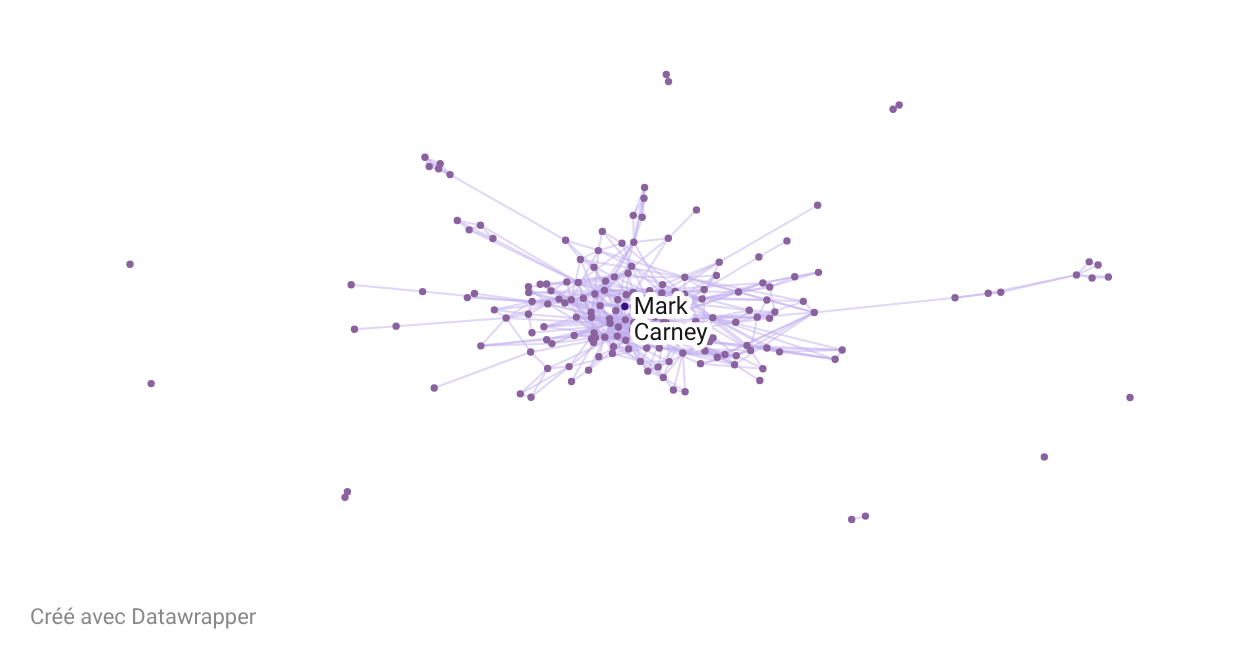
So let's look more closely at his stakes within this corporate web, and where he's placing bets in terms of Canada's economic resilience.
Brookfield, a global investment firm:
Carney is a primary Brookfield shareholder, which recently launched a $100 billion AI Infrastructure Program with NVIDIA and the Kuwait Investment Authority, and Carney Watch has made Carney's policy alignments with Brookfield very clear, with investment alignments across housing, energy, technology, climate, and the "catch all" Maple Fund.

"Five coincidences is a pattern. Every major government policy corresponds to a sector where Brookfield is massively invested — often via acquisitions Carney himself made while at the firm."
Be sure to explore the Carney Watch site and share it, it's a thorough and responsible tracking of Carney's somewhat egregious betrayals of his campaign promises.
Blackrock, global asset management firm:
Tightly tied to Brookfield and heavily involved in technology investments since at least 2021, ie:
- "Brookfield, BlackRock no longer in race for over $10 billion Aramco pipeline stake" - Reuters, 2021
- "BlackRock, Brookfield Pledge $4 Billion Infrastructure Push" - Bloomberg Law, 2024
- "BlackRock and Brookfield Announce Plans for AI-Aligned Climate Infrastructure Investments" - Arc Media Global, 2025
- "BlackRock, EQT-led group seals $33.4 billion AES deal in bet on AI power boom " - Reuters, 2026
- "Azerbaijan strengthens investment ties with Brookfield, BlackRock, GIP" - Euro News, 2026
As an aside, Blackrock CEO Larry Fink is also co-chair of the World Economic Forum (WEF, aka "Davos"), and he moderated many of the discussions. While I was watching the various panels, the shameless AI boosterism pushed by Fink was almost comical. Every chance he got, he plugged the fantasy of AI-driven economic growth, often interjecting with statements like "so it's clear there is no AI bubble" even when the discussion made no mention of the bubble. He seemed otherwise unable to form a coherent train of thought, either completely fixed on his apparent agenda of AI boosterism or too brain-rotted from excessive chatbot use to be able to contribute rationally to the discussions. I was floored by his generally bird-brained contributions to the discussions, and knowing it's men like him making such consequential global decisions is not reassuring.
Yes, there was an Ethics Probe into Carney's Corporate ties.
Following complying with an ethics screen prior to Carney's election – notably only reviewing 103 companies directly tied to Brookfield – Carney allegedly moved all his assets, including investments in over 550 companies, into a "blind trust".
Critics argue, however, that the probe was an "unethical, loophole-filled smokescreen" due to the fact that, "he knows what stocks he put in it, including stock options he will definitely own for years, and he chose his own trustee and was allowed to give the trustee instructions such as don’t sell anything, and his trustee is allowed to give him regular updates on his investments", as per Democracy Watch.
Now let's bring accelerationism into this mix
Accelerationism – the technological movement that has gripped the entire global economy – is, as the word itself suggests, a movement centred on speed and at-all-costs technological development. "AI" is the driver of the movement, fuelling both economic gambles and utopic/dystopic fantasies.
Based on my pleb-level access, here's what I've found re: Carney's stakes in the AI boom:
- "This Canadian Company Is Quietly Building the World’s AI Infrastructure" - The Motley Fool, 2024
"via its partially owned subsidiary Brookfield Infrastructure Partners, is leading the charge in AI data centre development. The company invests in infrastructure of all types (energy, utilities, water, etc), but data centres have become an area of particular focus in recent years" - "Brookfield launches US$100 billion AI infrastructure program with Nvidia" (as noted above) - BNN Bloomberg, 2025
- "Building the Backbone of AI" - Brookfield report, 2025
- "Brookfield: Next decade will see 75GW of AI data centers built, total AI infrastructure spend to pass $7 trillion" - DCD Magazine, 2025
- "Brookfield and Bloom Energy Announce $5 Billion Strategic AI Infrastructure Partnership" - Bloom Energy, 2025
- Brookfield Signals $80B Nuclear Partnership and Launches AI Infrastructure Fund as 2026 Growth Accelerates - MSN News, 2026
- "OpenAI's $10B Joint Venture with PE Titans" - Opentools, 2026
"a $10 billion joint initiative with four of the world's heavyweight private equity firms: TPG, Advent International, Bain Capital, and Brookfield Asset Management..." "this strategic alliance aims to integrate OpenAI’s advanced AI technologies into the portfolios of these investment giants and beyond"
And of course, the Canadian government created an "AI Strategy Taskforce" in 2025, followed by dedicating over $1B "to boost Canadian AI and quantum computing".
A "multidimensional economic disaster" that hinges on AI
People are tired of talking about the "AI bubble", so let's talk in terms of a "multidimensional economic disaster". Much better, no?
A year ago I shared this article from The American Prospect that signalled the main vectors forming a tenacious bubble around the AI industry. I shared it at my workplace too, trying to convince the leadership team to wait before adopting AI tech into our organization's stack (they didn't listen). Author Bryan McMahon essentially broke the bubble down within the following risk factors:
- AI's ever-increasing costs
- Silicon Valley's "all-in" investments
- Energy bottlenecks and local utility challenges
And now a year later, among hundreds of subsequent speculations on the bubble, this piece titled, Welcome to a Multidimensional Economic Disaster from The Atlantic (gift article) by Metteo Wong and Charlie Warzel, lays out the bubble's current status comprehensively:
The authors note how "functionally all" of the U.S.'s recent economic growth (which is still only a feeble 1.4%) can be attributed to AI investments. The article goes on,
Much of the AI supply chain—chips, data centers, combustion turbines, and so on—relies on key materials that are produced in or transported through just a few places on Earth, with little overlap. In particular, the industry is highly dependent on the Middle East, which has been destabilized by the war in Iran. A global energy shock seems all but certain to come soon—the kind where even the best-case scenario is a disaster. The war could grind the AI build-out to a halt. This would be devastating for the tech firms that have issued historic amounts of debt to race against their highly leveraged competitors, and it would be devastating for the private lenders and banks that have been buying up that debt in the hope of ever bigger returns.
 Matteo Wong, Charlie Warzel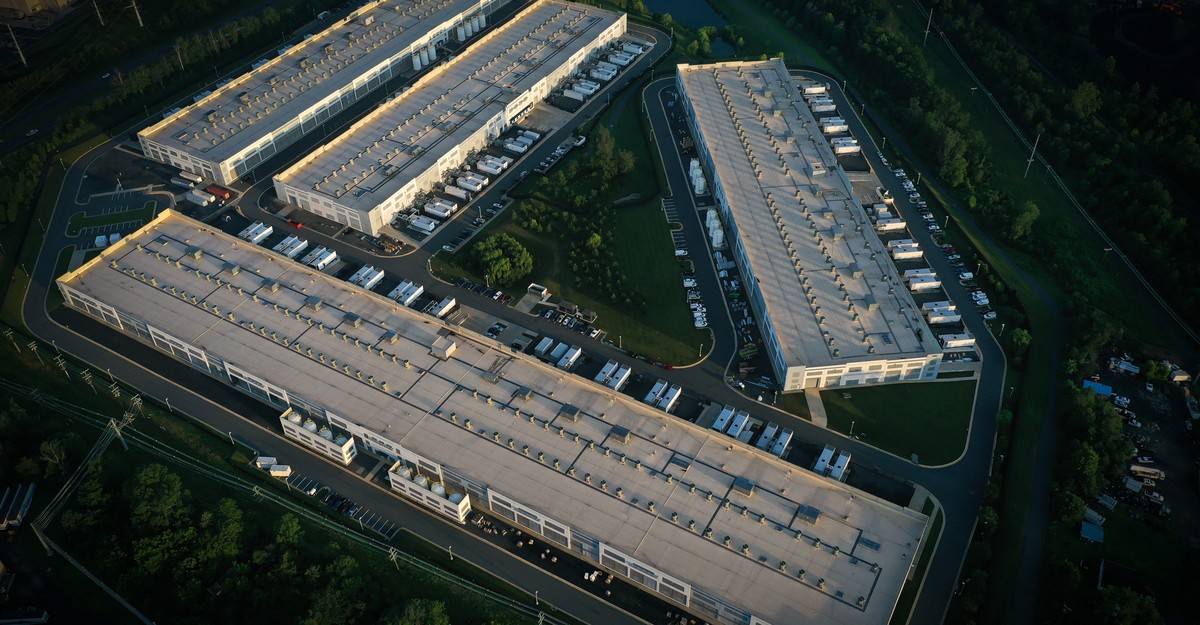
They note most of the world's advanced memory and training chips are manufactured in South Korea and Taiwan. As found through my own research, Taiwan's Foreign Minister, Lin Chia-lung, told Saudi Arabian media in 2025 that Taiwan produces 95% of the world's most advanced semiconductors. Chia-lung also noted Taiwan's "complimentary partnership" with the U.S., saying "since 2023, the US has become a top recipient of Taiwanese investments", and "Taiwan will maximize these advantages to form a “Taiwan-US joint fleet,” creating a win-win situation for both countries."
Currently, Taiwan is hastily purchasing U.S. arms while China is deploying fleets of attack drones to bases across the Taiwan Strait.
But Taiwan's semiconductors, while critical to the AI industry, are still only one piece of the "multidimensional" risks now congregating around the AI industry.
We also have Iran's closure of the Strait of Horan, "stranding one-fifth of the world’s exports of natural gas, one-third of the world’s exports of crude oil, and significant quantities of the planet’s exportable fertilizer, helium, and sulfur."* As per The Atlantic:
Meanwhile, Iran and Israel have begun bombing much of the fossil-fuel infrastructure in the region, which could take many years to replace. In only a month of war, the price of Brent crude—a global oil benchmark—has jumped by 40 percent and could more than double, liquefied-natural-gas prices are soaring in Europe and Asia, and helium spot prices have already doubled.
A helium crunch could trigger a shortage of AI chips or cause chip prices to rise. AI companies need ever more advanced chips to fill their data centers—at higher prices, the massive server farms, already hurting from elevated energy costs caused by the war, would have almost no hope of becoming profitable. Without these chips, new data centers would not be built or would sit empty. Astronomical tech valuations, and in turn the entire stock market, could collapse.
The article also points out hyperscalers' have taken on colossal amounts of debt, about $122 billion as of 2026, which is expected to continue ballooning.
Some of this is done through creative deals with private-equity firms including Blackstone, BlackRock, and Blue Owl Capital—which themselves operate as sort of shadow banks that, since the most recent financial crisis, have arguably become as powerful and as influential as Bear Stearns and Lehman Brothers were prior to 2008.*
Blackstone, Blue Owl, and the like are sinking huge sums into data-center construction with the assumption that lease payments from tech companies will pay for their debt. In order to pay for their investments, private-equity companies raised money from major financial institutions—but now the viability of those lease payments is coming into question as the hyperscalers’ cash flow is strained.
And they again note the impact of the war in Iran, which we must remember, was prompted illegally by the U.S. and has been tacitly supported by Carney:
The war in Iran affects data-center finances as well. Should energy prices continue to skyrocket, so will the cost of this already very expensive computing equipment, because it needs tremendous amounts of energy to manufacture and operate.
And those wildly expensive and environmentally destructive data centres?
Janet Egan, a senior fellow at the Center for a New American Security, described data centers to us as “large, juicy targets.” It is impossible to hide these facilities, which can cover 1 million square feet. Earlier this month, Iran bombed Amazon data centers in the UAE and Bahrain. American hyperscalers had been planning to build far more data centers in the region, because the Trump administration and the AI industry have sought funding from Saudi Arabia, the UAE, Qatar, and Oman. Now there’s a two-way strain on those relationships. The physical security of the data centers is more precarious, and the conflict is damaging the economic health of the petrostates, thereby jeopardizing a major source of further investment in American AI firms.
Just a few things going a bit wrong could compound, all at once, into a cataclysm. To wit: Qatari and Saudi money dries up. Sustained high oil and natural-gas prices drive up the costs of manufacturing chips and running data centers. Already cash-strapped hyperscalers struggle to make lease payments on their data centers, while similarly strained private lenders suffer as all of the AI bonds become deadweight. Tech valuations fall, taking public markets with them; private-equity firms have to sell and torch their assets, putting intense stress on the institutional investors and banks. The rest of the economy, drained of investment because everything was poured into data centers for years, is already weak. Unemployment goes up, as do interest rates. “Bubbles pop. That’s the system,” Lipton said. “What isn’t supposed to happen is that it takes down the whole financial system. But the concern here is that AI investment isn’t confined and may spread to the whole economy.”
How are we all feeling now, knowing Carney has hedged most of Canada's economy on the AI industry?
Should the system break, much of the blame would lie squarely with the technology companies. The stakes of this build-out, from the beginning, have been framed in civilizational terms—a geopolitical race alongside an existential one. The winners will control the future and reap the rewards. At every step of the way, AI firms have appeared to prioritize speed above the physical security of data centers, supply-chain redundancy, energy efficiency and independence, political stability, even financial returns. And in that quest for unbridled growth, the AI industry has wrested ungodly amounts of capital from investors all looking for the next big thing, ensnaring the entire economy.
I would add that, should the system break, the blame ought to fall on every corporate leader who blindly bought the hype, Carney included.
Prime Minister Mark Carney is placing the nation's economic survival on a house of cards
"Irresponsible" doesn't begin to cover it. Carney's elitism comes with fundamental blinders – an inability to see past his own abstracted economic arrogance.
His speech at Davos was an invitation to foreign investors to collaborate on claiming Canada's resources for the benefit of the corporate class. Their struggle is indeed existential, and it has absolutely zero concern for ordinary Canadians. We are nothing but necessary collateral damage, just as developing nations have been treated with the same cold dispassion for decades. Carney believes "pragmatism" involves sacrifice, but it's us who he's delegated to managing those sacrifices. The hubris of the elite is once again our problem, and once again, none of us asked for it.
As a "middle power", Canada is trying to hedge its risks by playing for both the petrostates and the electrostates, and is likely to fail in both arenas due to accounting so poorly for the phenomenal risks presented by the AI industry. This is neoliberalism at its very worst, and may very well be the vocal warm-up for its death knell.
Carney's speech was indeed a eulogy for the Liberal International Order – the order is dead, and corporate executives embedded throughout Western governments are panicked, unable to comprehend the demise not just of their precious order, but their legacies, their validity, their power, their very identities. As I've said many times on this blog, this is an existential time for everyone involved.
And the systems eagerly lining up to fill the gaping voids are authoritarian fascism, the inevitable and well-predicted end-result of the neoliberal order. Canada's federal government will soon take that turn as well, while norms like public transparency are already eroding. They will justify consolidation of power, put the entire country into a military lockdown, and ramp up surveillance to extremes many Canadians never would have imagined possible, all while our local economies are pillaged of their remaining capital through the last gasps of the AI industry, leaving regular Canadians struggling to afford basic living expenses. There is the smallest possibility that Carney will see the virtues of universal basic income and reinstating secure universal public healthcare, but with his banker blinders and tunnel-vision SAP-strategy, I think his current course is rather firmly set.
What can we do?
Our job is to start imagining real alternatives to current systems both institutional and economic. I'm tentatively heartened to see Avi Lewis has won the federal NDP leadership race after sweeping most of the party's executive leadership, but I'll admit my trust is still very low (if I'm being honest, at this point the only reason I'd want to see him in office is because his wife is Naomi Klein). I have little faith that any member of this current governing system has the ability to extract themselves from the rotten nest of neoliberal governance that got us here.
But, as is often the case, time might be on our side. The next Canadian Federal election is in 2029, and if Carney is exposed as the corporate fascist he's currently building himself out to be, if the disaster of Western Canadian "sovereignty" is made painfully clear, and if election integrity is somehow preserved until then, public opinion might not only be swayed toward real social progress, but we might be in a position to demand, with force, something new. We need someone with guts and vision who truly harnesses the will of the people in service of building a social framework that does not simply repeat the exploitative cycles of neoliberalism (and also, imo the next era can't be led by men).
I've seen neoliberal apologists surfacing on socials lately, stating in their typical moderate, smug tone that "neoliberalism was better than fascism", as though any of this is reversible, as though neoliberalism could possibly be the antidote to neofascism. The hollow-brainedness of such sentiments really blows me away. Neofascism is the natural outcome of neoliberalism, trying to go backwards would only lead us right back to this point again and again. We can't undo the entropy of our political trajectory by wistfully cherry picking the mythical virtues of a system that has cataclysmically failed us.
Let's shake this stupid order off, leave it behind, and build a better world.