On memetic influence and viral immunity ~ Part I

Following my last post on the ethos of grift in the nonprofit sector, my winding path of mulling and musing led me to concepts of memetics – that is, the study of memes. Back in 2019 I posted on FB about memes ruining democracy – the discourse I was part of, heavily saturated with meme-based communication at the time, wasn't ready for it:
April 9, 2019
Social media is ruining democracy/elections via memes. I sound like a grandma here, but here I go:
Political memes are “memes” because they strike an emotional chord that prompts others to share. They pare down complex, nuanced ideas and concepts into snappy mic drops (dear god am I sick of mic drops), and make people feel clever and correct for relating to them. They prey on fear, anger, and cynicism. And they often appear magically from the void with thousands of likes, giving us the impression they are factually sound (likes can easily be bought). “Everyone seems to agree with my anger, therefore my anger is justified!”. They are rarely based in facts or whole truths. IMO, memes are the reason we’ve lost a sense of mutual respect and balanced discourse when it comes time to weigh things like elections. People who use social media heavily are being psychologically manipulated by strategic meme machines. It’s tearing us apart.
Looking back, I don't know if digging further into memetics at the time would've been beneficial to my mental health – I don't think my load-bearing mental beams could've managed the overload. Memes were so embraced by our online culture that leveraging my latent memetic fluency seemed more useful than stepping into the dawning reality that they'd been weaponized and were actively infecting our online communities. Even now, while exploring information for this piece, I've had moments where I've had to steady myself. It's a lot, and collectively we're not in great shape.
The study of memetics has so far been mainly for the benefit of those wielding them; advertisers, political communications, and goofy online anarchists. And because memes are broadly viewed as "low culture" while also constantly evolving, they've stealthily flown under the radar of institutions and governments for the larger part of twenty years. "Going viral" is still a grossly misunderstood process, and up until the attention economy took over in the 2020s, leveraging memetics included a combination of data-literacy and zeitgeist fluency. There's a whole online subculture of users so fluent in memetics they've watched the Dark Enlightenment/NRx movement spawn from its early redpill blogger days, its doctrine circulating, via memes, through incel culture and evolving into the manosphere the Western world is now under the thumb of. Memes spread and mutate, just as viruses do, ignoring how they function is like ignoring how any virus transmits through a society; do so at your own risk.
I have to wonder, how did the field of communications miss this? We're meant to be the stewards of our online infospheres – how did we underestimate this phenomena so profoundly? (the answer is neoliberalism, but that's a different post)
Now the attention economy is at the end of its life cycle as AI systems, trained on over a decade of organic engagement, replace human-to-human engagement with synthetic systems. And the teeming hoards, still addicted to the validation cycles of exposing themselves online, continue to provide the data that continues to refine the systems that continue to hone the memes that continue to hijack and persuade collective thought. AI systems are evolving to be able to detect which users produce strong organic responses – they're analyzing the nature of why content resonates, then feeding that data into algorithms that exploit those resonant elements. It's an ongoing process of A/B testing, continuously updating the synthetic webs of influence we're all participating in.
Because of this, mounting research is now proving memetics to be not only a worthwhile field of study, but a field that is perhaps foundational to our collective cognitive survival. As "brain rot" takes up more space in spheres of psychological wellness, its causes are also becoming clear, and memetics are the genesis point.
Memes used to be fun
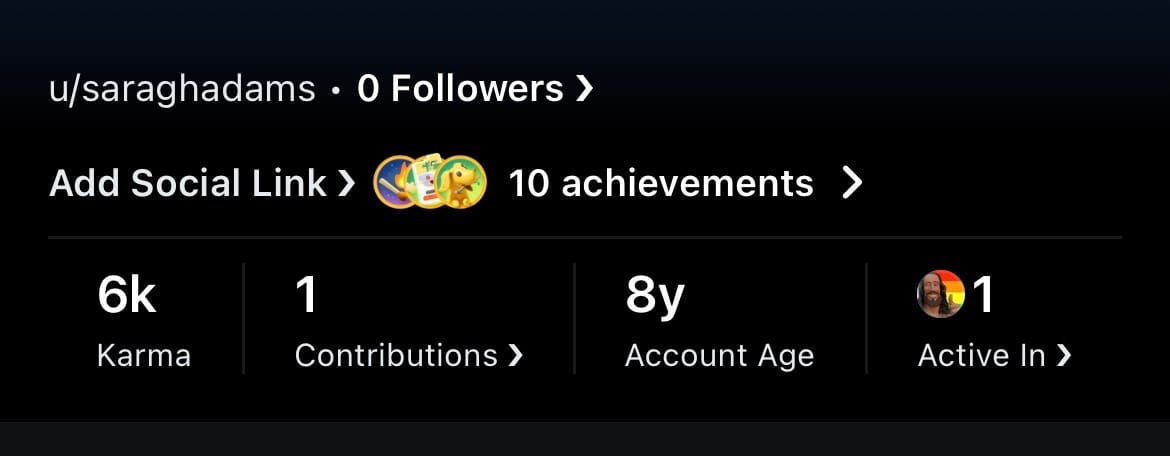
When viral internet content first emerged, to me it was just a new mode of play. My reign as "memelord" was brief and bright, peaking around 2015, when I joined reddit specifically to post this image that I had badly photoshopped. It immediately went viral and I never posted on reddit again. My reddit "karma" remains outstanding:
At the time it was one of about a dozen viral memes I'd made that had taken off in the wild, not intending them as memes at all, just playing with the evolving formats, having fun with semantics, riffing, flipping them around to amuse myself and the few people in my online circles.
I went into this more in my Existing as Process post, but I have a pretty strong sense of self-preservation, and somehow my volatile, formative years grounded me in a fundamental sort of, what I think is, integrity. I can feel when my path isn't honest. It's a sense of withering, a sadness, of moving further away from what brings me life. Like a resonance fraying over time. When I feel it happening, I correct course, even if it means leaving behind things others perceived as "success". It's why I left religion in my early adulthood, why I've ended relationships, why I went to art school, why I pursued comedy, why I ran a flower farm, why I left Alberta, why I'm here writing this now.
As I'm learning a vocabulary that aligns with this lifelong mode, the term "locus of control" has floated to the surface, meaning, "the degree to which people believe that they, as opposed to external forces (beyond their influence), have control over the outcome of events in their lives."* People with an internal locus of control believe their actions determine outcomes, people with an external locus of control believe external forces beyond their influence determine outcomes. Some people of course oscillate between the two. But it seems to me that having a strong internal locus of control lends well towards preserving a sense of agency, which has led me to this path of needing to understand broader currents and their causes.
As the rowdy early days of viral content progressed I noticed a shift. It started as a feeling of "the normies are ruining our jokes" – Facebook users were gaggling over memes we'd already processed years earlier. Our online club of mirth had been infiltrated, and people were literally losing their minds; soon you couldn't have a conversation without someone injecting gif reactions and block letter memes – it was what I now understand to be a norm cascade; memes had reach a critical saturation point and everyone suddenly felt part of an exciting "in-group". Soon memetic sharing became social signalling – it wasn't about making stupid jokey presents for your friends anymore, it was about allegiances and in-group status. Many early, prominent memelords were hired by newly-formed content creation agencies, something that seemed like a joke in itself at the time. If you were good at making memes, one way or another, the markets were finding ways to exploit you.
I came to memetic culture from the scrappy social margins, grounded in childhood trauma and neurodivergence, and later amplified by my experience in art school and working in comedy. My brothers and I had already cultivated what could be considered a potent, insular meme culture that was like a second language to us. We still revert to it when we're together – the references, tones, mannerisms – shared meaning contained within a novel vernacular only we understand. I think many neurodivergent siblings and friend groups share something similar. It's why tight comedy collectives tend to go farther than solo comedians – when you cultivate a unique and potent set of meaning as a group, you're actually forming a little memeplex. Such group-generated micro-cultures include rhetoric that hybridizes with external influences, and the clever ones tap the anxieties of the zeitgeist – consider Monty Python, the comedic circles around David Wain (Stella), early SNL casts, SCTV, Tim & Eric, Tim Robinson and the comedians involved in I Think You Should Leave – all these groups cultivated novel and well-defined micro-cultures among themselves that were amplified by the energy of the collective, eventually breaking into the cultural mainstream.
Extreme social tension creates dissonance, and dissonance creates "fertile ground" in collective culture – a reservoir of entropic energy that memetics can metabolize. This is explored in more detail in an article titled, The Memetics of AI Successionism by Jan Kulveit:
Cognitive dissonance is often described as a feeling of discomfort - but it also represents an unstable, high-energy state in the cognitive system. When this dissonance is widespread across a population, it creates what we might call "fertile ground" in the memetic landscape. There is a pool of “free energy” to digest.
Cultural evolution is an optimization process. When it discovers a configuration of ideas that can metabolize this energy by offering a narrative that decreases the tension, those ideas may spread, regardless of their long-term utility for humans or truth value.
Where did memes even come from tho?
"Meme" is a term first coined by evolutionary biologist Richard Dawkins in his 1976 book The Selfish Gene. He extended Darwinian principles (which have their limits, as exposed by Lynn Margulis who introduced the concept of symbiosis) to include theories beyond genes, framing memes as units of information that could be spread and replicated like viruses throughout societies.
Dawkins later distanced himself from memetic study, but his colleague, cognitive scientist and philosopher Daniel Dennett, who, along with Dawkins was considered one of the "Four Horsemen of New Atheism," took the concept of memetics further around 2009, advocating among academia that it offered a useful philosophy in terms of critiquing postmodernism, which, as a self-identified verificationist, annoyed him due to its "lack of truths, only interpretations" – he believed cognitive meaning could only be counted as truth if it could be empirically verified.
My understanding of his position on memetics is that he considered them symptomatic of the wrongness of postmodern culture, dissolving truth through what he called "deepities" – a word that itself stands as an example of something having zero memetic value – a semantically irritating term with almost no "catch on" qualities (I wonder if that was intentional).
"Deepities" are sentiments and statements that carry two or more meanings, possessing superficial equivocations that appear profound, but are essentially trivial. Memes capitalize on such conventions, and deepities are considered real psychological tricks.
Dennett posits that each "deepity" holds two meanings:
- One that seems profound but can be easily disproven as nonsense
- One that is obviously trivial, but true
The convention performs a sort of psychological slight-of-hand, where the brain confuses convolution with truth. And while it's true that extremely simple statements can be genuinely profound, the "deepity" convention specifically exploits minds that have disengaged or eroded mechanisms of critical thought, creating room for a viral idea that can corrode their ability to identify truths.
This is also an example of where subtext literacy is important – that is, the degree to which a person can understand subtext in language, which is closely related to critical thought. People online who fail to recognize joke conventions are good examples of eroded subtext literacy (and by extension, eroded critical thought).
So let's play game called DEEP OR DEEPITY? where we examine some common sayings, divorced from their original context (as they so often are), that seem "deep".
Think through each of these phrases – do they prompt beneficial reflection, or do their deeper meanings lead you to muddy circles? Speak them out loud and jot notes if it helps:
"Love is just a word."*
“All endings are also beginnings. We just don't know it at the time.”*
"Be yourself, everyone else is already taken."*
"Everything happens for a reason."
"He who knows, does not speak. He who speaks, does not know."*
"There is no 'i' in team"*
"Better to have, and not need, than to need, and not have."*
"Happiness is a choice"*
Did any take a bit of detangling?
Let's review them together.
"Love is just a word":
First meaning: The word "love" is a word. Sure. That's true.
Second meaning: The experience of love is just saying it. NOOOOOOPE.
Love is, provably, a foundational emotion. So foundational in fact, that it splinters into entire ecosystems of feelings. Reducing that entirety into "you just have to say the words for it to be real" – nope! That's not only a deepity, it's a dangerous, dehumanizing mistruth.
Verdict: Deepity
“All endings are also beginnings. We just don't know it at the time.”:
First meaning: Events we often frame as finalities are just genesis points towards what comes next, and we don't always see that. Ya, true!
Second meaning: It's pretty hard to pull a different meaning from this. No tricks!
Verdict: Deep
"Be yourself, everyone else is already taken.":
First meaning: I'm on board with "be yourself", and I get the point is we shouldn't try to be like other people, but...
..."is already taken" as the justifier doesn't do the work it appears to. Everyone else... already... took/chose themselves? Okay but isn't everybody else also mirroring others, struggling to be themselves, as we all are?
Second meaning: Be yourself... because other identities are taken? So if more identities were available it'd be acceptable to be someone else? What is the logic here? It's weakass is what it is.
Verdict: Deepity
"Everything happens for a reason.":
First meaning: Fundamentally incompatible with anyone who doesn't believe in causal determinism. Some of us believe in agency!
Second meaning: Okay, sure, everything does happen because the things happened before end up making the next thing happen. The "reason" I'm getting a drink is because I'm thirsty. So what? Is my drink providential?
Epistemically, the two meanings have nothing to do with each other. Weak!
Verdict: Deepity
"He who knows, does not speak. He who speaks, does not know.":
First meaning: Wisdom is calm. Proselytizing how smart you are is not wisdom.
Second meaning: No second meaning. Clean reflection!
Verdict: Deep
"There is no 'i' in team":
First meaning: The word "team" doesn't have an "i" in it. Sure. True.
Second meaning: Teams are more important than individuals, your needs don't matter if you're on a team. What an easy concept to exploit!
Verdict: Deepity
"Better to have, and not need, than to need, and not have.":
First meaning: Having stuff is better than needing stuff.
Second meaning: This one is slippery because it uses all those extra words to make it seem like it holds a deeper truth, but both clauses mean the exact same thing. Weak!
Verdict: Deepity
"Happiness is a choice":
First meaning: Kay well if we're contextualizing "happiness" as a vague concept of living with contentment and joy, sure, you can choose to adjust your parameters of success and satisfaction and live your life within ideas of happiness.
Second meaning: If you're having a terrible experience, you can choose to be happy. No. Not true, and a dangerous thing to tell victims.
Verdict: Deepity
Can you see how certain phrases are actually just well-decorated horseshit?
Grifters, in the form of gurus, politicians, influencers, astrologists and "thought leaders" are really good at creating messaging that pings the feeling of truth while planting shallow or misguided ideas.
Comedians often turn to such clichéd phrases for material because the nonsense is prepackaged – it's an easy win: the set up is already established in the phrase's familiarity, it's just a matter of seeing how far you can stretch the nonsense of it.
But such phrases can also be legitimately dangerous. They tell people truth exists in convolution, and train people to ignore their own critical thought processes. Their benign truths trigger intuition without activating insight or analysis. We're told truth is just beyond a vague horizon, all we have to do is trust the fuzziness to reach it. Over and over, they teach us to treat epistemic confusion as profundity.
Corporate jargon, astrology and monetized wellness are potent spreaders of such cognitive tricks, often utilizing multi-modal delivery mechanisms to create mini ecosystems of corroded information. Online "communities" are ripe spaces for viral thought, as such bubbles exploit behaviours associated with peer conformity.
Consider the Asch Conformity Experiment within the context of online "communities":
In the experiment, a group of participants were shown an image with one line on the left and three different-length lines of the right, and were meant to determine which of the lines on the right were equal in length to the line on the left. Seems simple enough, right?
But each group only included one "real subject", while the rest were planted as part of the experiment, and were told to give wrong answers on some of the trials. As the experiment progresses, "the subject denies the evidence of his own eyes and yields to group influence".
From SimplyPsychology's summary of the experiment:
-On average, about one third (32%) of the participants who were placed in this situation went along and conformed with the clearly incorrect majority on the critical trials.
-Over the 12 critical trials, about 75% of participants conformed at least once, and 25% of participants never conformed.
-A small number of participants were highly susceptible: about 5% of participants conformed on all 12 critical trials, going along with the group every time.
-In the control condition (no confederate pressure), participants virtually never made mistakes. Asch found that error rates in the absence of group influence were less than 1%.
Memes and memeplexes (groups of memes) are like crystallized vehicles for exploiting social identity, groupthink, and conformity.
We already know how prone humans are to "in-group" dynamics and we understand individuals' needs for inclusion and belonging, however we rarely reflect on "diversity" as the load-bearing concept within DEI frameworks. Diversity of thought is just as important as diversity of ethnicity, experience and identity, yet that is where online discourse regularly fails us. By siloing ourselves in online groupthink, we make ourselves much more vulnerable to fundamental mistruths.
Truth is clear. It doesn't turn your brain into a pretzel in order to justify shitty behaviour. It can manifest through multiple modes, analogies and parables, but what makes it true is that it will always hold under analysis.
Parasitic systems are spreading thought viruses
Memes are a potent form of modern communication, and because they evolve quickly through multiple modes and mediums, they are ideal carriers of mistruths, which, when released strategically and with intention, can literally infect the minds of entire populations. When assholes like Musk say "woke mind virus", they're bringing that framing from memetics, while ignoring the fact that they themselves have fallen victim to one of the most corrosive mind viruses in the history of humanity: patriarchal white supremacy.
Back to Dennett and his position on memes: I don't align with his "pragmatic realist" positions on evolution, but I very much understand his take on memes and deepities. Notably, he also believed "the relevant danger from artificial intelligence (AI) is that people will misunderstand the nature of basically "parasitic" AI systems, rather than employing them constructively to challenge and develop the human user's powers of comprehension."*
Another notable name in the study of memetics is Susan Blackmore, author of The Meme Machine and advocate of secular spirituality. As per Wikipedia:
Blackmore's treatment of memetics insists that memes are true evolutionary replicators, a second replicator that like genetics is subject to the Darwinian algorithm and undergoes evolutionary change.[23] Her prediction on the central role played by imitation as the cultural replicator and the neural structures that must be unique to humans in order to facilitate them have recently been given further support by research on mirror neurons and the differences in extent of these structures between humans and the presumed closest branch of simian ancestors.[24]
And as per Wikipedia's Memeplex page:
Various manifestations of memeplexes can be observed in our everyday surroundings, and they usually have a profound impact on shaping individual and societal behaviors. Some of the most common examples include:
Belief Systems and Ideologies: This refers to a wide array of constructs such as religions, philosophies, political alignments, and overall worldviews. All of these systems are composed of multiple interrelated memes that collectively form a cohesive belief system.
Organizations and Groups: Entities such as churches, businesses, political parties, and clubs also illustrate memeplexes. These groups often share a common set of principles, rules, or beliefs that are propagated among their members.
Behavioral Patterns: These include various cultural practices and routines, such as musical practices, ceremonies, marriage rituals, festivities, hunting techniques, and sports.
Contrary to inherited gene complexes, memeplexes encounter less pressure to provide benefits to the individuals exhibiting them for their replication. This distinction is because memes and memeplexes propagate virally via horizontal transmission, making their survival not solely dependent on the success of their hosts.
As I was thinking though it all I realized: that dazzling Bluesky map I keep returning to? It's actually a map of memetic transmission, which also explains why a viral pathogen genome researcher created it. Realizing this was a huge "duh doi" moment for me.
Let's look at it again:
I wasn't wrong about the silos, but the piece I was missing was putting together why the clusters were formed according to followers. The clusters represent memeplexes, which means in the clusters with well-defined boundaries especially, those users are engaging with a very specific set of shared memes. And when I noted the "conformity bubbles" in my Signals and Silos post, and then the "cystic" Resistance Plateau in my Existing as Process post, what I was really seeing could best be compared to metastatic growths. I think the point where a memeplex might go from "shared memes" to "metastasizing infection" might be when something like that cyst forms.
This is another point where I'll express relief that my handle exists in the glowy fog above the big dissipated swoosh. Because it shows what I already know: I have decent memetic immunity.
What builds memetic immunity?
Here let's hold the concept of rhetoric up for a sec. According to an article titled The Art of Persuasion found on practicalmemetics.com (a website I stumbled on, authored by Dr. Martin Farncombe and – will you look at that, Sue Blackmore, who we introduced above),
Rhetoric dates back around two-and-a-half millennia, and was the method by which the memeplexes of art, democracy, the sciences and civil society spread around the shores of the Mediterranean Sea, spawning the Greek and Roman empires along the way.
Farncombe and Blackmore frame the potency of rhetoric around Aristotle's Art of Rhetoric, defining the three elements of persuasion as ethos, logos, and pathos.
Ethos: "an appeal based on the authority or character of the speaker. It is a measure of how well the speaker convinces the audience that he is qualified to speak on the subject."
Logos: "a logical appeal, usually based on factual information. The technique relies on a clear presentation of the 'facts', walking the listener towards the conclusion that the speaker wants."
Pathos: "an appeal to the audience's emotions deeper instincts, bypassing reason altogether."
Advertisers use combinations of the three elements, depending on the product and sophistication of the audience. They have been embedding cues to our genetic drives inside their memes for years, particularly in adverts for products bought primarily by one sex rather than the other.*
When I first started framing these ideas I was certain neurodivergencies presented both natural immunities and vulnerabilities to memetic rhetoric. I thought divergencies optimized for creativity and moral justice seemed to offer a strong buffer – however when I started digging deeper into this idea, it became clear that current categorizations of neurodivergencies (ADHD, autism, dyslexia) actually offer almost no indication of memetic immunity. Hereditary genetics on the other hand, do appear to play a critical role.
Part II of this post will further explore those findings and dig more into memetic immunity (there's so much to cover, and I don't want to overwhelm y'all in this post). What dawned on me as I've worked through these thoughts is that memetics are actively replacing community and culture as we know it. There's so much more to unpack.
I encourage you to take some time to ingest the above and apply it to your online infospheres. More to come.