On the quiet power of becoming nobody
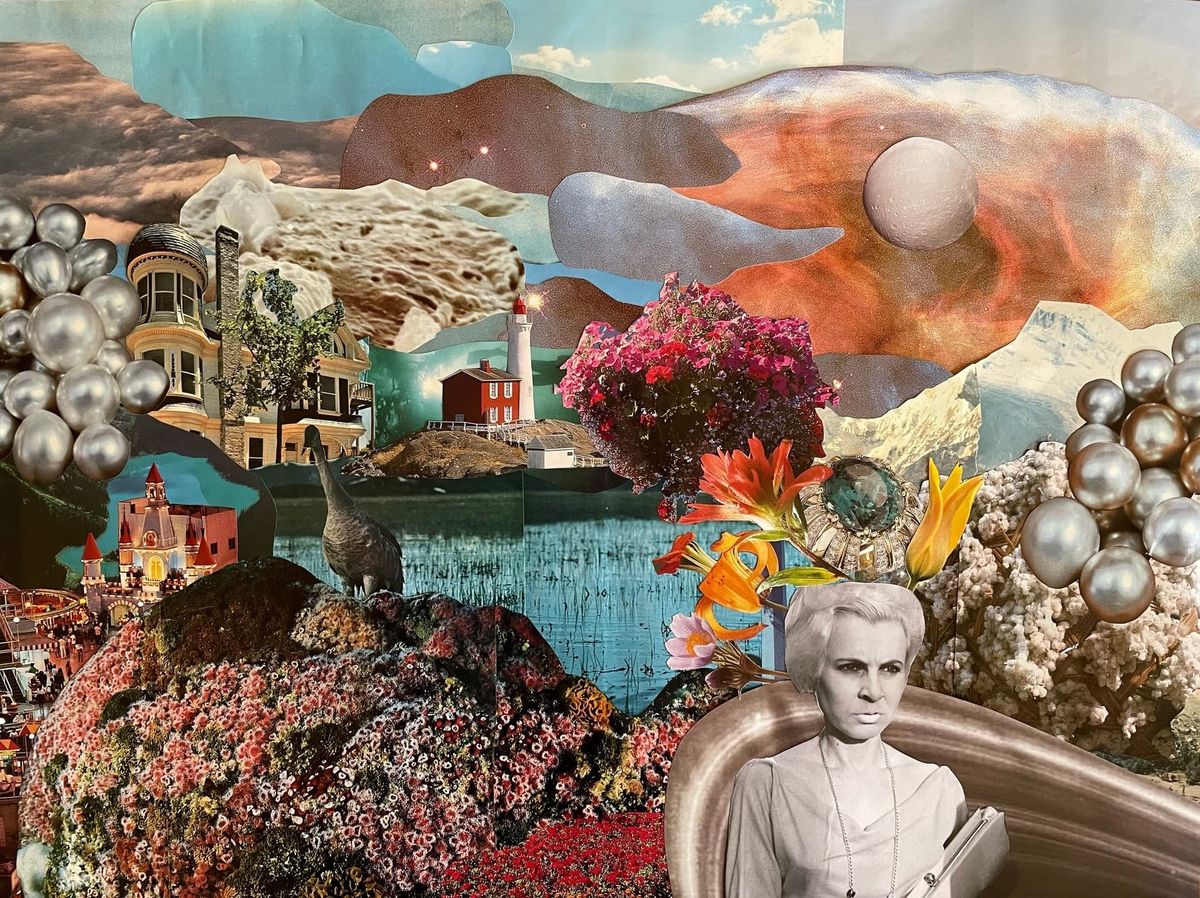
Stripped of "online presence", who are we?
This question feels more urgent as personalized technology lulls us ever deeper into self-obsessive surrealities; social algorithms that trap us in feedback loops of self-worth, dealing just enough dopamine to keep us on the verge of feeling seen. I'm watching creator friends sink deeper into these tarpits of ego; their obsessive presentations of Self, cultivating the Online Persona, paring their reality down to the validating drips of a few dozen followers.
I was there once. I remember how it felt; the multi-faceted anxiety, a fragmented awareness that generated a constant, muted thrum of panic; the hollow pit deep in my gut saying just keep posting. It told me someone out there in the world wide web would eventually see me and understand me. I just had to live my truth louder. I just had to expose more of myself. Become more vulnerable and share the journey. Surely this would lead to true connection. I'd seen it happen before when our online spaces were good, I'd experienced it before, and surely in my case, because I was so unique and bright and interesting, surely lightning would strike twice. Or three times! Four... five? Six? Seventy? Eight hundred?
I had a lightning machine in my pocket. "You get out what you put in", I told myself. The more brilliance I poured into the thing, the more brilliance it radiated back at me. At the time it never occurred to me that there were other such devices that have pleased humankind for centuries, called mirrors. But my lightning machine didn't just reflect myself back at me, it amplified my reflection through dozens (and potentially hundreds!) of disembodied voices echoing validation in the form of "♥️". Not reach outs. Not nourishing conversation. Not meeting in the park to bide the time together. Nothing that required more than a split second of their time. Just "♥️".
But a hundred wholesale "♥️"s can add up to almost one whole hug, right?
If I could just generate enough of them, my existential loneliness hardly registered. The hollow void left by my psychologically destructive father was papered over with cheery online acclaim and I dug my heels in, calling it "community".
I sustained myself on cheap, marketized affection and poured more into the lightning machine.
I dated someone at the peak of this mode. He was largely offline and only posted occasional hiking trips, his beaming daughter or glimpses of evenings with friends. No "couple selfies", no obsessive updates. I enjoyed his company and we had a lot in common. His idea of fun was my idea of fun; finding quiet natural spaces, cozy adventures, board games, making fun costumes for Halloween, occasionally vegging out with video games, baking – he had good taste and potent, grounded opinions.
But I couldn't sit still. I was between realities, fractured across online validation and real world presence. I couldn't see the beauty of what he was offering as anything but content, because at that point my life was content. Everything was content. And everyone inside my world engaged in the same way, I was just more successful at the razzle dazzle of it. I'm a born performer, and the engagement felt like a valid pathway to Good Things.
But when we disagreed on anything I was triggered into untethered panic. I was firmly baked into the dogma of my online silos, I had no tolerance for difference of thought, especially from men. Pushback from a man felt like an attack, and I was thoroughly conditioned to frame myself as the wronged victim. At one point I remember him gently criticizing my online activity, saying, "I don't want to hear about your life through Instagram, I want to hear it from you". He lightly argued against the social justice binaries I embraced. Offended, I framed him to my friends as "emotionally domineering". I remember saying the words, and I wither thinking about the blindness of them.
I can look back now and understand that it bruised my ego when he didn't exalt me the way my online spaces did. I wanted him to reflect that same concentrated dazzle back at me, I wanted him to embody it and keep me on that high. Which is an insane thing to expect from someone you're presumably building a relationship with.
That man was with me the day I took possession of my farm. He took the photo of me standing proudly in front of my farmhouse.
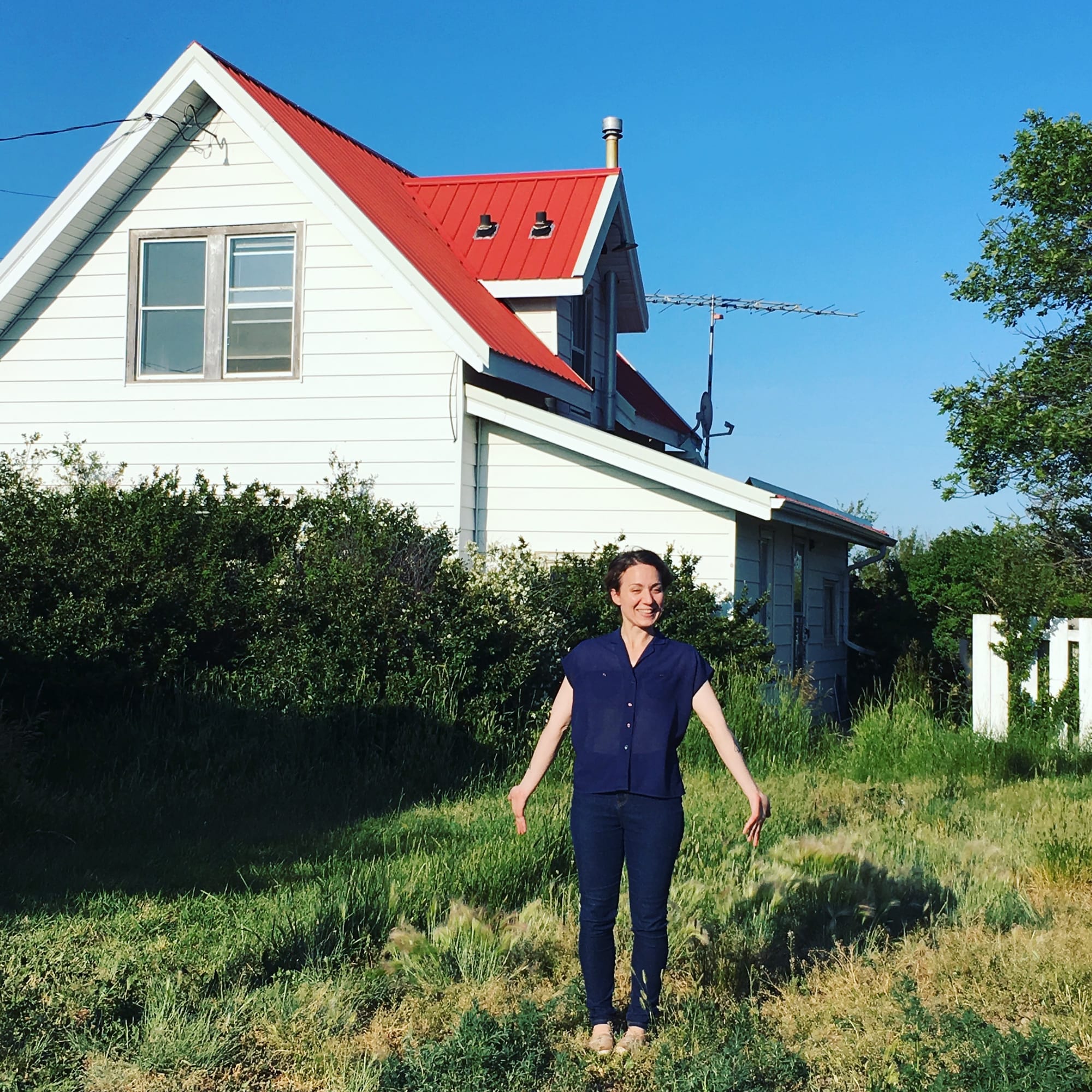
I wonder how isolating that time (and all the time since) must've felt for him and other "offline" types like him. When it was so normal to expose our entire selves in those spaces, before we called it addiction, before we knew the cognitive costs (and many still don't understand, or refuse to acknowledge, the full scope of that damage). How lonely it must've felt to watch everyone lose themselves to their bespoke infinity mirrors.
I feel it now that I've taken time to rehabilitate. When you're outside the social media bubble looking in, it truly looks like madness. After so many years of increasingly aggressive algorithmic manipulation, it's like some people I know have been replaced by robots, as though 8 of 10 people in every room are slightly less conscious than the rest, tethered to manufactured, synthetic realities.
The relationship with that man ended, because of course it did. He was excited about my farm adventure and supportive from a distance, but he kindly made it clear he couldn't do the 1.5 hour drive on a regular basis. He had a full life, and reflecting back on it, what he gave during that time was heaps more than what most I've dated since have invested. He cared. I couldn't see it or feel it then, but I can understand it now.
When my coparent passed away and I had to leave the farm and return to the city, my entire self ached to be near that person. He had known my late coparent, our kids had grown up together, and he was the last thread of care I'd felt before my life was transformed and everything changed. I'd been in another world for four years and was coming back to a city reshaped by both devastating loss and the tolls of covid. I was desperate for any foothold – a steady throughline to the beforetimes. It wasn't romance that I needed, just care. A quiet evening of leaning on someone in silence.
I invited him over for dinner one evening to catch up, but what I really wanted was to gauge any potential for rekindling what had existed before. There was none, he had moved on, the window had closed. So it goes.
And I know now that any rekindling would've been the wrong direction for me. What I wanted was to "go back", a common, impossible urge when moving through grief. I had to throw myself into the messiness of moving forward, painfully, healing slowly, regressing and progressing, dissolving and metamorphosizing into the person I am today – still not fully transformed, still evolving, albeit at a pace that feels much gentler than those years.
I don't share that story out of regret for what I potentially missed. I have a gorgeous life in a darling house surrounded by lush gardens and beaches, my kids are thriving, and I've detangled my dependence on those digital systems significantly. I now regularly experience entire days where my phone sits forgotten on my dresser. Moving the few platforms I still use to my desktop has broken habits of dependency and mindless scrolling, and I've come to love existing just as I am, as close to a "nobody" as I can be by online standards.
I live in a place where almost no one knows me, as close to a clean slate as a person could ask for. I'm rebuilding my life with intention without online dependence, relearning how to exist in a real-world community, and a big part of why I'm less interested in dating is because I hate how texting pulls me back to depending on my phone. I hate feeling those habits reemerge.
It's also become starkly clear to me that at this point, dating apps are full of addicts. They're tools of enablement. Anti-social and hypersexual behaviour is normalized and coddled there – this is nothing new, most who use the apps agree. But few identify themselves as that sort of user. Few will admit they're really just seeking the hits and highs of validation, fewer will recognize that their "adhd" is both symptomatic and exacerbated by problematic social media usage (which is also closely tied to hypersexuality), and none have the tolerance for tension, differences, or anything that "disturbs their peace". They want another mirror. Someone to tell them how special they are. There's a fundamental incuriosity about it – no one looks deeper or invests energy into understanding the other, because all they see in anyone else is themselves. They're seeking partnership based on what that person will reflect back at them. I can remember the mentality: "I'm the whirlwind, I just need someone who loves whirlwinds!". Girl, your brain was scrambled. You needed detox.
Now I hotly agree with that man from years ago. I want phone calls or real-world hangs, full stop. I don't see any benefits to being tangled with someone else's headspace via constant texting, engaging with or confusedly navigating their inner narratives, like trying to insert a thought into a prerecorded podcast and triggering the host for daring to veer away from their polished sense of reality. I'm not interested in or impressed by the updates of online personas; those carefully curated, obsessively posed, meticulously presented versions of people that mask their increasingly disordered psyches. There's no truth there.
I don't want another mirror, I don't need someone anxiously agreeing or fawning or optimistically exclaiming. I want a person. A new, novel universe to explore. Tactility. The richness of an asynchronous, nonlinear slow-build. Not a mirror, a window. Someone who frames the world in a new way, who presents a freshness, who doesn't suck the air out of every space they enter. And that's what I want to be for them, not a carefully poised portrait but a window thrown open on a spring day, "look at all that! Can you believe it? Let's go see!"
The power of becoming a nobody is radical in that it goes against the conditioning of our online spaces. Those spaces that tell us to embrace our "main character" energy, to "take up space", to "live our truth". We've broadly misinterpreted the meaning of those ideas, because of course we have; they were filtered through commercialized community. They amplify the mirrors, telling users that, either no one is more special than they are, or that their specialness is just past a horizon only the app can provide access to.
Mirror parables have existed for as long as humans and their reflections have. Aesop's Fables warn against covetous greed through stories of creatures becoming jealous of their own reflections. The Mirror of The Bavarian Witch warns us that "obsession with how we appear can drown out who we are", there are countless Indigenous stories detailing the trappings of reflective vanity, and the mythical Greek figure Narcissus is perhaps the best known story of tragic vanity, where he falls in love with his own reflection in a pool of water, ultimately driving himself to madness and death because he couldn't have the object of his desire. This myth of course became the origin for the term "narcissism". Those parables and moral lessons have survived the ages for a reason. It's worth considering that colonizer culture has not only forgotten those lessons, but seems to be embracing the opposite, justifying problematic, self-obsessive usage through "connection and community".
Instagram and other social media platforms centred on the marketization of self are mirrors enhanced through psychologically reflective technology; addictive algorithms that decimate attention spans, erase memory function and literally trap users in infinity mirrors of self-obsessed feedback. And it's tragic to see people still so consumed by it, even now when the Attention Economy is in steep decline and the returns of such "community-building" efforts – aka: the hopeful marketization of self with the intention of monetizing community – are essentially nil. People are psychologically trapped in a never-ending commercial for themselves.
The quiet power of becoming a nobody liberates you from those prisons. You're granted the agency to exist freely, no one's voice in your head but your own. No third-hand, digitized, watery "wisdom" dictating the rules of How To Be.
Your truth is who exists without those filters. Your truth is what remains when that panic has been quelled. When your mind has healed. When you can sit in silence and see the most beautiful thing and not feel the impulse to post it, or even talk about it.
Life is not a content machine, and as long as you're staring into that mirror, you will miss the richness of its lessons. When the preciousness of existing becomes your own secret joy and time slows to something smooth and rich, it's in those moments your truth emerges.
And in truth is power. Power to recover, to endure, to see people as they are. You become a Totem of Real, a portal for others to find meaning and care. A window to a new universe.
And rather than leave this on a note of moral shaming, I will once again recommend to anyone who feels trapped by apps like Instagram: move the app (and other social media apps) to your desktop and delete it from your phone. Change the environment of how you access those spaces and the habits will begin to weaken. From there, it's much easier to continue changing other usage habits.
Going cold turkey is impossible, but you can achieve a healthy distance. It's worth it, I promise.